
Post Views: 170,861
Views
From Olympic podiums to the Super Bowl, these athletes have used their platforms to show that mental health challenges can affect anyone.
Elite athletes endure relentless pressure to perform, often facing fierce public scrutiny in a culture that has historically discouraged seeking help. From an early age, these competitors are conditioned to be invincible — physically superior and mentally bulletproof. Yet, physical strength offers no immunity to clinical depression, anxiety, or bipolar disorder. Performance anxiety, the isolation of injury, and the weight of expectation can take a serious psychological toll.
Fortunately, the tide is turning. A growing number of sporting legends are shattering the silence, proving that mental well-being is just as critical as physical conditioning. By sharing their stories, these athletes are dismantling stigma and redefining what it means to be strong.
1. Tyson Fury (Boxing)
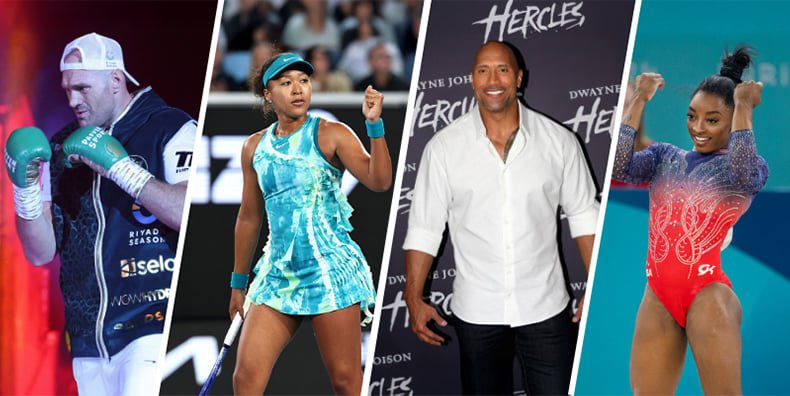
British heavyweight boxing champion Tyson Fury, known as “The Gypsy King,” has spoken publicly about living with bipolar disorder. Despite dethroning Wladimir Klitschko in 2015, Fury spiraled into a dark depression that included substance use and suicidal ideation, famously revealing that he nearly drove his Ferrari off a bridge during his lowest moment. Diagnosed with bipolar in 2017, he credits his recovery to his Christian faith, family, and a disciplined return to training. With a scheduled return to the ring on April 11, 2026, against Arslanbek Makhmudov, Fury continues to act as a powerful voice for destigmatizing mental illness. “I have flaws, and I have many of them,” he once said. “But I’m an ambassador for mental health.”
2. Terry Bradshaw (NFL)
While celebrated as a four-time Super Bowl champion and NFL Hall of Famer, Terry Bradshaw is equally prolific as a broadcaster, actor, and musician. However, behind the public persona, he struggled silently until a diagnosis of clinical depression in 1999. Following years of anxiety attacks, intense anger, and alcohol abuse, Bradshaw found stability through medication, therapy, and faith. He remains unapologetic about his journey. “You know what, I’m not ashamed of who I am,” he told esperanza magazine. “It’s the way I was made. I just got some issues here, and I dealt with them. And I’m proud of it.”
3. Simone Biles (Gymnastics)
Widely considered the greatest gymnast of all time, Simone Biles changed the definition of strength when she withdrew from the Tokyo Olympics to protect her mind and body from “the twisties ” — a dangerous mental block. She prioritized her safety over gold medals, sparking a global conversation about the pressure placed on elite athletes. Biles returned to the world stage at the 2024 Paris Olympics with a renewed perspective, proving that taking a step back is often the bravest move of all. “I have to focus on my mental health and not jeopardize my health and well-being,” she said. “It’s okay not to be okay.”
4. Dwayne Johnson (WWE/Film)
Originally known as one of the greatest professional wrestlers of all time, Dwayne “The Rock” Johnson has successfully transitioned into a global superstar on the big screen. Recently, he drew attention for a dramatic turn in the A24 biopic The Smashing Machine (2025), portraying MMA legend Mark Kerr’s battle with addiction. Despite his massive success, Johnson has been remarkably open about his own history of major depressive disorder, using his platform to encourage men to seek support. He emphasizes that psychological well-being is as vital as physical strength. A dedicated father and philanthropist, Johnson actively contributes to social causes ranging from animal welfare to natural disaster relief.
5. Michael Phelps (Swimming)
As the most decorated Olympian in history, swimmer Michael Phelps has been candid about the price of perfection. He revealed to esperanza magazine that he spiraled into deep depression, anxiety, and substance use even while at the peak of his career. “With athletes or celebrities, people think they’re so much different than everybody else,” he said. “But I’ve gone through the same troubles.” In December 2025, Sports Illustrated honored Phelps with the Muhammad Ali Legacy Award for his enduring commitment to mental health advocacy.
6. A.J. Mendez (WWE)
Retired WWE superstar and author A.J. Mendez (formerly known as AJ Lee) is dedicated to combating the stigma surrounding bipolar disorder. Now a New York Times best-selling author and executive producer of WOW (Women of Wrestling), Mendez uses her platform to discuss her bipolar diagnosis. In her memoir, Crazy Is My Superpower, she detailed her childhood struggles and the cultural pressure to hide weakness, specifically challenging the “machismo” often found in the Puerto Rican community. Although she retired in 2015, Mendez made headlines with a surprise return to WWE SmackDown in late 2025.
7. Naomi Osaka (Tennis)
As a four-time Grand Slam champion, tennis superstar Naomi Osaka made headlines not just for her dominance on the court, but for her refusal to compromise her peace. In 2021, she withdrew from the French Open to prioritize her mental health, revealing a long battle with depression and anxiety that made mandatory press conferences unbearable. Her decision forced the sports world to re-evaluate how it treats athletes. After taking time away to become a mother, Osaka returned to tennis with a mission to advocate for player well-being. “I felt like it was important to stand up for myself,” she said. “And I hope that my actions encourage others to do the same.”
8. Kevin Love (NBA)
For years, NBA champion Kevin Love struggled in silence, viewing his challenges as a weakness he had to hide. That changed in 2017 when he experienced a panic attack during a game, leaving the court unable to catch his breath. He later penned a groundbreaking essay, “Everyone Is Going Through Something,” which dismantled the stigma of vulnerability in men’s sports. Love founded the Kevin Love Fund to provide mental health education and support. “Nothing haunts us like the things we don’t say,” he wrote. “So if you’re reading this and you’re having a hard time, you’re not alone.”
9. Chamique Holdsclaw (WNBA)
WNBA legend and Olympic gold medalist Chamique Holdsclaw was initially treated for major depression, but later re-diagnosed with bipolar disorder after antidepressants triggered a manic episode and impulsive spending sprees. She has since turned her struggles into advocacy. “I want others to understand it can get better. I went through a period when I had no hope, when I didn’t want to be here,” she revealed to bp Magazine. “I hope they see my journey and get inspired to keep moving forward.” She remains an active speaker, recently headlining the 2025 MLK Convocation to discuss the intersection of civil rights and mental wellness.
10. David Feherty (Golf)
With 10 international wins and a successful second career as a commentator, former pro golfer David Feherty has lived a full life alongside the challenges of attention deficit hyperactivity disorder (ADHD) and bipolar depression. He views his condition with a unique perspective. “You know, I tell people I don’t suffer from bipolar disorder, I live with it,” he told Rolling Stone. He even credits it for his broadcasting success: “I see from a different side of the street than most people. And I think one of the reasons I got hired to do commentary is the ability to describe something differently.”
11. Amanda Beard (Swimming)
A seven-time Olympic medalist and former world record holder, swimmer Amanda Beard faced battles out of the pool that included bulimia, drug use, major depressive disorder, and self-harm. “Some days, it was hard to just get out of bed,” she told esperanza magazine. Her life turned around when she embraced a combination of medication and therapy. Beard has since transitioned into mentorship, returning to the University of Arizona as an assistant coach in 2023.
12. Clint Malarchuk (NHL)
Former NHL goaltender Clint Malarchuk is best known for surviving a devastating, life-threatening injury on the ice in 1989. Following that incident, he faced a different battle: post-traumatic stress disorder (PTSD), alcoholism, and obsessive-compulsive disorder (OCD). After pulling himself out of a deep depression through medication, talk therapy, and meditation, he found a new calling. “I realize now that playing hockey gave me the platform for my real purpose,” Malarchuk said. “To raise awareness of mental illness, and to help reduce the stigma surrounding depression and anxiety so that no one has to feel alone.”
13. Kate Nye (Weightlifting)
As an Olympic silver medalist and former World Champion, American weightlifter Kate Nye (Vibert) appeared to have it all — until a diagnosis of bipolar disorder in 2019 revealed that her periods of intense productivity were actually symptoms of hypomania. After realizing that her ability to train on nearly zero sleep was a warning sign rather than a superpower, she sought help to stabilize her mood. She has since become a vocal advocate for athletes, proving that medication does not dull a competitor’s edge. “I felt weak for thinking I needed help,” she admitted to BarBend. “But honestly, it has taken a weight off my shoulders knowing what I have to do to feel like a functioning human being.”
14. Suzy Favor Hamilton (Track and Field)
Olympic middle-distance runner Suzy Favor Hamilton experienced intense hypersexuality linked to bipolar disorder, as well as acute peripartum depression. She has courageously shared how her condition drove her toward risky behaviors, using her story to demystify the often-misunderstood symptoms of mania. “In my case, my bipolar was driving me toward sex. It could have just as easily been driving me toward drugs and alcohol,” she told bp Magazine. While she has since stepped back from the public eye to live a private life in California, her candor remains a powerful testimony that diagnosis and treatment can provide a path forward.
15. Charles Haley (NFL)
As the first five-time Super Bowl champion and a Pro Football Hall of Fame inductee, Charles Haley became an NFL icon. However, his post-NFL life was rocky until a 2002 diagnosis of bipolar disorder helped explain years of struggle, including a decade-long battle with substance use. Haley eventually found balance through medication, therapy, and a men’s prayer group. Today, he dedicates his time to charity work and mentoring the next generation of football players.
UPDATED: Originally published June 24, 2020