
After a few sessions with a new therapist, she leaned back in her chair and said something that made me laugh out loud. “I think we should assess you for adult ADHD, and perhaps comorbidities, including autism…” With that, I’m happy to share “Late-diagnosed ADHD in autistic adults: My journey.”
Here’s the thing — I was so busy chasing rabbits in my mind that I couldn’t think half the time. I had a slew of symptoms and habits that only now make sense.
Introduction
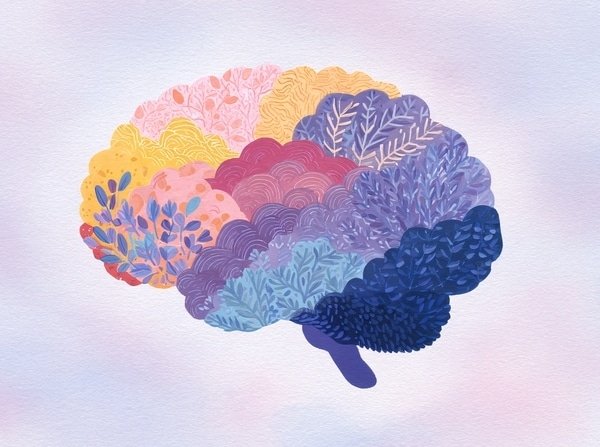
My therapist went on to say any new diagnoses will be in addition to the bipolar disorder diagnosis I picked up in college. I remember blinking at her. ADHD — attention deficit hyperactivity disorder — at 33? Oh, that’s me in the image.
I genuinely thought it was something hyper little boys had in elementary school. Sure, I was a busy child, and nothing pleased me more than being physically active on the soccer field, but ADHD?
I had done my research into bipolar disorder, and I had developed the necessary coping skills to manage the mood swings and feelings of overwhelm. I could even pass for “normal,” but ADHD felt so out of place, and autism spectrum disorder even more so.
Agreeing to the series of evaluations was a no-brainer for me. When the diagnosis came back, placing me on the spectrum for both adult autism and ADHD, I was shocked.
Then came relief
The initial disbelief quickly turned to relief. I’d never been so happy about a diagnosis before. Suddenly, my childhood made sense — I made sense. I wasn’t broken or inconsistent, and I wasn’t a walking contradiction of focus and motivation that turns into a “not getting out of bed today” mess.
I realized I had a lot of work ahead of me, because while a diagnosis explains, it doesn’t justify or automatically repair. That was my journey, and I had to walk it.
Why do so many people have both autism and ADHD?
“The neurodivergent brain: it processes, learns, and/or behaves, shall we say, “differently.”
Estimates suggest that the prevalence of adult ADHD (aADHD) is 2.5% of the population, with studies showing that it also affects 30% to 50% of autism diagnoses. This makes for very uneasy bedfellows. Therapy is a must for you and your family because, while ADHD is already a tough cookie to crumble, adding an autistic spectrum to the mix brings opposing symptoms and serious stress caused by inconsistent behavior.
Both are neurodevelopmental conditions affecting central nervous system skills like speaking, focusing and socializing that most people take for granted. When these basic abilities develop differently, it can create complex interactions and behaviors. While most people believe that a single condition or diagnosis is “to blame” when someone acts differently, it’s often a dual or multiple diagnosis that’s at work. The term neurodivergence is often used when discussing ADHD and autism.
aADHD and autism — my internal tug-of-war
Once the diagnosis had settled in, I began to see how both had been playing a game of push-and-pull inside my life for decades. For example, I love structure and want an organized home, but I’ll buy organizers and never use them. I get distracted by the packaging the baskets and trays came in and think I can use it for a scrapbooking project. The result is snippets of cellophane everywhere and an even more chaotic home.
Autistic-me loves order, so I color code, plan and map in detail, but then my other half wakes up and finds a million different things to do instead, which often don’t work out. A beautiful morning of writing usually turns into an unproductive “clean my desktop folders for 40 minutes” episode instead.
I had always believed I was undisciplined, but now I realize it’s neurological crosscurrents. Autism gives me deep focus, including writing sprints where I can concentrate for hours, forgetting to eat or go to the bathroom. However, aADHD means that if I don’t get hooked immediately, my attention slides off my intentions like Teflon.
When and how my childhood made more sense

Here’s the thing — I was so busy chasing rabbits in my mind that I couldn’t think half the time.
In school, and later at college, this dyad of behaviors looked like I excelled in subjects I loved but barely scraped by in others, even though I was capable. I recall my high school reports saying, “Beth is a bright student, but lacks motivation in some subjects. She must apply herself more and focus on reaching her potential.”
Here’s the thing — I was so busy chasing rabbits in my mind that I couldn’t think half the time. I had a slew of symptoms and habits that only now make sense.
Here are a few that have persisted into adulthood:
- Anxiety and rumination: I worry all the time. When I say something, it replays in my head, and I constantly berate myself for not doing my best or being better. An unanswered message would keep me up all night, leaving me a zombie the next morning.
- Rejection sensitivity: While I didn’t have a social following and was really quite awkward around people, I felt absolutely terrified of disappointing others or having them think less of me. Where “normal” people may realize at some level that others don’t walk around thinking about you, I was convinced that I left a bad “taste” in their minds.
- Inattention barriers: While I could really dig deep into something that fascinated me, I more often ended up cloud-gazing out the classroom windows. The lawnmower on the grounds became a beat to my inner band, and I frequently struggled with focusing on immediate tasks.
- Whole-body exhaustion: As you can see, I had a lot on my mind and didn’t sleep much, so I always felt tired. By the second lesson at school, I was usually asleep, which the teachers saw as laziness.
- Hyperfocus bouts: When something hit the sweet spot in my mind, I was absolutely mesmerized, and I would spend hours intensely focused. It gave my parents and friends hope that I had finally found something to wake me up and get me moving, only to have my ADHD kick in and I’d lose interest.
There were times when I could shine only to flicker out when my undiagnosed condition tripped me up. I’d be the star striker on the soccer team, only to miss practice or show up late to the game. I wanted to be conscientious, but I I couldn’t manage time at all, and people always teased that I’d be late to my own funeral.
Now I know that I wasn’t lazy or undependable. My brain just crossed its wires at times, which would short out motivation and focus.
Life after a late aADHD and autism diagnosis
Since my diagnosis, I have had to look really hard at what I do, so I can figure out why I do it. To live and function in an adult world, I have to practice careful environment management to create a place that’s calm enough to concentrate, but not so “empty” that I feel threatened or become distracted.
I’m a two-sided coin
I am a coin with two sides and a sneaky bipolar rim. This means that I can have moments of “muchness” where I get super excited and want to conquer the world. Then I have times when I hit bottom in “nothingness” and can’t seem to focus on anything or care about the time of day.
With some trial and error, I have found several strategies that work for me:
- I maintain a flexible schedule instead of keeping to a rigid school-style diary.
- I plan my deep work time for mornings and ensure I get enough sleep.
- To protect my ability to write, I focus on emails and other administrative tasks after lunch.
- I use timers, reminders, fidget spinners and pauses before committing to a task.
Embracing the whole aADHD, autism-spectrum and bipolar me
The tug-of-war is still there, and probably always will be. However, things are different now. Instead of feeling like two opposing forces are tearing me apart, it feels more like two strong currents I’m learning to navigate.
That shift has changed everything.
How’s that for a journey? I’m glad to have shared it with you, and hope it was helpful — for yourself or someone you care about. I invite you to take a look at more of my work. Visit my online home, Body + Mind, and for my Chipur articles, head to The Body + Mind Collection. As always, thank you.
For Bill’s Chipur emotional and mental illness info and inspiration articles, review all of the titles or do it by category — scroll down on mobile, right sidebar on desktop.

Beth is the mental health editor at Body+Mind. She has five-plus years of experience writing about behavioral health, specifically mindfulness-based cognitive therapy. Beth also writes about the power of human design to reveal our full potential and purpose. You can find her on X @bodymindmag.