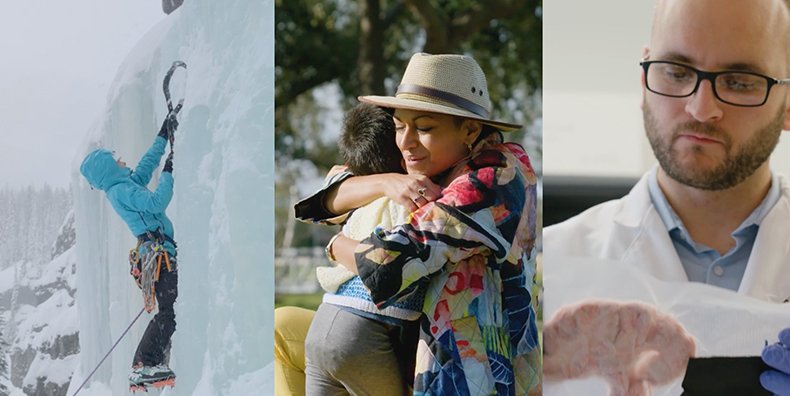

Ahead of the global virtual screening of ‘BrainStorm’ on World Bipolar Day, Sara Schley and Bonnie Waltch discuss diagnosis, stigma, and hope.
In her memoir, BrainStorm: From Broken to Blessed on the Bipolar Spectrum, Sara Schley wrote publicly for the first time about living with bipolar 2 after decades of silence. What began as a personal act of truth-telling has since expanded into a larger conversation through her podcast with Jim Phelps, MD, and now through BrainStorm, a documentary about the bipolar spectrum.
Created with award-winning director Bonnie Waltch, the 74-minute film brings together personal stories and current bipolar science in a way that feels both intimate and accessible. BrainStorm follows six people living with bipolar as they make sense of diagnosis, treatment, and the often uneven path toward greater stability and well-being. By pairing lived experience with medical insight, the film aims to expand public understanding of bipolarity and challenge some of the stigma that still surrounds it.
The film will have its first virtual global screening on World Bipolar Day, Monday, March 30, followed by a live panel discussion. Tickets (offered on a sliding scale) are now available on the BrainStorm website.
In the conversation below, Schley and Waltch discuss how the project evolved from page to screen, why a broader view of the bipolar spectrum matters, and what they hope viewers take away from the film.
Editor’s note: This interview has been edited for length and clarity.
bpHope: For readers who are just hearing about BrainStorm for the first time, how would you describe the film in your own words?
Sara Schley and Bonnie Waltch: BrainStorm combines the stories of six compelling characters who live with bipolar in their journey from devastation to recovery, with the latest bipolar brain science to educate and inspire. The film’s mission is to save lives, end stigma, and maximize healing for people living with bipolar and all who love us.
BPH: Bonnie, you’ve worked on science-driven documentaries and major public media projects. What drew you to this story?
BW: Sara is what drew me to this story! I didn’t have any experience with bipolar and didn’t know much about it until I read Sara’s memoir, and she approached me about making a film. As a science documentary filmmaker for most of my career, I told her I’d want to incorporate science stories into the film so it wouldn’t be just personal stories from people living with bipolar. I’d never seen a film that tackled both the personal and the scientific sides. The more I learned about the science, the more interested I became. I’d also never made an independent film before, only programs for PBS and clients, so I loved the idea of making this film with Sara.
BPH: Sara, your memoir inspired the film. At what point did you realize your story might need to move beyond the page?
SS: It was a challenging decision for me to finally share my story of living with bipolar. I kept resisting the urge to press “send” to the publisher for fear of the stigma. But once I finally crossed that threshold and was fully “out,” I wanted to have the message of the book reach as far and wide as possible. Shout it from the rooftops: You can live well with bipolar. You don’t have to suffer. There are treatments that work. There is bipolar without mania, and that is often misdiagnosed as depression with devastating results. The right diagnosis means the right treatment and the possibility of a full, rich life.
I was lucky to have been friends with the great filmmaker Bonnie Waltch since college, and after Bonnie had a successful documentary on PBS, I asked her, “Hey Bonnie, could BrainStorm have a PBS national Broadcast?” And now WETA, the flagship PBS station in Washington DC, is slated to broadcast the one-hour version on public media in 2027.
BPH: Sara, how did your own lived experience shape the film’s perspective?
SS: Because I live with bipolar 2, the type that does not exhibit extreme mania, I was misdiagnosed with severe depression for decades, with devastating impact. I wanted to make sure that the key takeaways in the film would include these: Bipolar exists on a spectrum, there is bipolar without full mania, misdiagnosis is rampant and dangerous, and proper diagnosis is a lifesaver.
BPH: Sara, how might seeing bipolar as a spectrum help people better understand their symptoms, especially when getting an accurate diagnosis is not always straightforward?
SS: As I’ve shared with folks, if you or someone you love lives with severe, debilitating depression, you’ve tried everything and nothing works, you or they may be on the bipolar spectrum. The reason why that’s a powerful shift of perspective is that if you can bring that possibility to your practitioner and get a proper diagnosis of bipolarity, you can get treated for bipolar and get well. This never would have happened without the right diagnosis. So, if you have the classic depressive symptoms of lethargy, low energy, lack of interest in life, or suicidal ideation, think about bipolar and get it checked out. Jim Phelps, MD’s website is very helpful in discerning these differences.
BPH: Bonnie, how did you approach translating complex science into something that feels human and accessible on screen?
BW: It’s definitely a challenge to make complex scientific concepts understandable for film and TV viewers, but my experience has taught me to work hard to get scientists to simplify their language and avoid jargon. I always tell them to pretend they’re talking to a third-grader, and I do as many takes as needed to make sure they’re explaining something in a comprehensible way. All of the scientists in the film were brilliant communicators, so it wasn’t difficult with them! I also believe that weaving personal stories with the science makes it more accessible because it helps the audience care about the people and gives the science a human face.
I’m also a big believer in clear graphics, as they can help explain science elegantly. We used several graphic metaphors throughout the film to help explain scientific concepts.
BPH: With so many stories out there, how did you both choose the six people featured in the film?
SS: We were very fortunate that Devika Bhushan, MD, published her Los Angeles Times op-ed, “I Am California’s Acting Surgeon General. And I Have Bipolar Disorder,” in August of 2022, when we were just beginning our journey of creating the film. My editor texted me and said, “You have to see this.” Upon reading it, I felt this immediate kinship with Dr. Bhushan — despite our differences in age, ethnicity, nationality, and oh yeah, I never made surgeon general — it was like I was reading my own story. The same bizarre cognitive dysfunction in our early twenties, coming seemingly out of nowhere, the same inability to process information in med school (I didn’t make it, she did), and the same confusion in picking vegetables in the grocery store. “I have to write to her,” I thought, and did, and to my delight, Dr. Bhushan graciously responded, “Sure, let’s meet.” Unbeknownst to me, many of the other characters in the film were doing the same thing at the same time — Major General Gregg Martin, Molly Kawahata, and Andrea Vassilev, PsyD — and Dr. Bhushan connected us.
Bonnie and I shared a goal of representing a diversity of people by age, race, ethnicity, and gender to show that bipolar is an equal opportunity hazard. It doesn’t care if you’re Black or white, left or right, gay or straight; it’s coming for you.
BPH: Bonnie, what stayed with you most from the stories of the people in the film?
BW: Several words come to mind: resilience, ambition, and brilliance. I am so impressed at how much they each had to overcome and how far they came from when they were first experiencing bipolar symptoms to getting a diagnosis and treatment. I really hope their stories inspire others who are struggling to get the help they need and to practice the behaviors our characters model in the film, leading to healthier, happier lives.
BPH: What did each of you bring to the project that made this a stronger film together than it would have been separately?
SS: Bonnie and I, though similar in values, age, and intent, have very different professional and personal backgrounds. I bring the perspective of lived experience with bipolar, and Bonnie brings the science documentary expertise. By profession, I was a consultant to businesses in strategy, leadership, and sustainability, so I brought 30 years of that work to the project. Bonnie had the deep dive into everything about filmmaking. We’re a good complement to each other. On the weekends, when we’re on the road, we both like to do anything outdoors, so that was good, too!
BPH: Were there moments when your conversations changed the direction of the film or deepened its message?
BW: So many. We were sleuthing the science stories from the beginning with the basic inquiry, “What is going on in the brains and bodies of people with bipolar?” After interviewing some 50 scientists, we landed on four key stories that set our direction: genetics, brain circuitry, mitochondria, and circadian rhythms.
SS: We wanted to focus on “actionable, evidence-based science.” That is, information that people living with this can take home and implement immediately. This is beneficial not only because of the practices themselves, but also because of the psychological benefit of having agency. We can have an impact on our own health. Though medication is important, it’s not the whole story. Maximizing circadian rhythm stability is a good and simple example. Get up at the same time every day, and earlier is better.
BPH: What challenges did you face in presenting current bipolar science in a way that felt clear, accurate, and meaningful for viewers?
BW: Making a science documentary is always a moving target because the science can change so quickly. For my last film about climate feedback loops, for example, we cited the then-current statistic that the Arctic was warming 2 to 3 times faster than the rest of the globe. By the time the film was aired on PBS, that figure had risen to 4 times. So it’s impossible to stay completely current. That’s why it’s important to choose science stories that are evidence-based, not some theory that may come and go. We focused on the science of genetics, brain circuitry, mitochondria, and circadian rhythms because there was extensive research and data on these topics.
BPH: Bonnie, what storytelling choices helped you avoid stereotypes or sensationalized portrayals of bipolar?
BW: It was important to represent a range of people living with different types of bipolar to show the fact that it can affect anyone and that there’s a spectrum. One of our bipolar experts in the film says, “Throughout my career, I have never, ever met a person living with bipolar disorder who has the same condition as somebody else.” It was also important to dispel negative stereotypes by showing people living with bipolar who are highly intelligent, successful, artistic, and compelling. Finally, by including a segment on famous celebrities and accomplished people, we hope to show how creative and entrepreneurial qualities are disproportionately represented among people with bipolar.
BPH: Even as mental health has become a more visible topic, why do you both think bipolar remains so misunderstood?
SS and BW: Partly because of how little funding is allocated to bipolar research. As bipolar expert Michael Berk, PhD, explains, “Within mental health, arguably the most neglected top 10 burden of disability is bipolar. And bipolar 2 is almost completely ignored compared to bipolar 1. So, it’s the most neglected of the most neglected of the most neglected.”
Also, many clinicians aren’t trained to properly diagnose bipolar disorder, so it falls under the radar. Or worse, they misdiagnose it as depression, and people are given the wrong medication, which can make them worse. This seems to be due to a lack of education around it in medical training, which could be remedied.
The Hollywood-type media does not help as it consistently sensationalizes the worst aspects of living with bipolar that do not represent the truth.
BPH: What kinds of conversations do you hope BrainStorm sparks in families, communities, and even clinical settings?
SS and BW: We hope that people experiencing symptoms will have the information and tools to advocate for themselves with their clinicians if they think they might have bipolar. We also hope that clinicians will become more aware of how to diagnose individuals and ask deeper questions, such as about family history.
BPH: Why was it important to show not only struggle, but also the possibility of greater stability and well-being?
SS: We didn’t want to present it in a Pollyanna way and imply that everyone with bipolar can easily get better because it’s way more complicated than that. Many people still struggle, even with the right diagnosis and medications. Sometimes it can take a long time to find the right med titration. But we wanted the ultimate message to be hopeful — that there are things you can do to gain agency, like setting your circadian rhythm, practicing social rhythm therapy routines, meditating, exercising, eating well, and more. Stability and well-being are quite possible for most people.
BPH: What do you hope people living quietly with bipolar — perhaps still carrying shame or secrecy — take away from this film?
SS: You are not alone. There is nothing wrong with you. Indeed, people like us are disproportionately represented in every creative field, from music to writing to entrepreneurship.
Living with this challenge hones unique, powerful, and beautiful qualities of character and soul. You may be an emotionally fearless friend, you may have deepened your compassion, you may be more disciplined in attending to your health because you know the risks if you don’t, and you may be more grateful than most for your joy and your capacity to think because you know what it’s like to live without them.
BPH: What would success look like for this film in a year from now?
SS and BW: Millions of viewers around the world!
BPH: If there’s one message you hope stays with viewers long after the credits roll, what is it?
SS and BW:
For people with bipolar:
- You are part of a beautiful tribe.
- You can survive and even thrive while living with bipolar.
For their loved ones:
For clinicians of all kinds:
- Look for bipolarity in your patients who are depressed. They may indeed be on the bipolar spectrum.
- With the proper diagnosis and treatment, they can thrive.
Editorial Sources and Fact-Checking