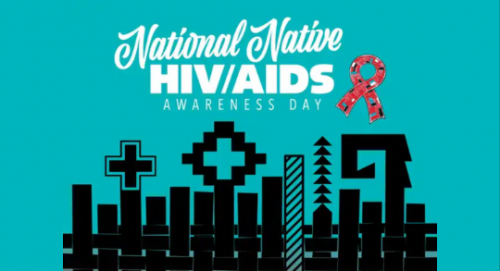

Friday, March 20, marks National Native HIV/AIDS Awareness Day (#NNHAAD), which is observed each year on the first day of spring. Launched in 2007, this awareness day is an opportunity to educate Native people about HIV and AIDS, shine a light on the health disparities facing these populations and to honor and uplift those lost to the epidemic as well as those working to end HIV.
This year’s theme is “From Ceremony to Action: Renewal, Respect, and Collective Strength.” As the NNHAAD organizers explain on Facebook:
“This year’s NNHAAD theme…highlights the connection between cultural traditions and community-driven action in addressing HIV in Native Communities. The imagery in the poster reflects a transition from night into the light of a new day, symbolizing hope, healing and renewal. The community members paddling together across flowing water represent the collective effort required to strengthen HIV prevention, treatment and care. Together, these elements represent the journey from ceremony to action and our collective strength as Indigenous communities to honor cultural teachings and support one another in ending HIV.”
To find events and awareness campaign messages you can share, search #NNHAAD and #NativeHIV on social. Examples are posted throughtout this article.
Download campaign materials on NNHAAD.org
AIDSVu.org, which offers infographics and interactive maps based on HIV-related data, includes an NNHAAD tool kit about Native communities, including American Indians, Alaska Natives and Native Hawaiians.
“Certain age groups in the American Indian/Alaska Native (AI/AN) community are more affected by HIV/AIDS,” states AIDSVu. “In 2023, young American Indians/Alaska Native people (AI/AN) aged 25–34 had the highest percentage (38%) of new HIV diagnoses of any age group. Additionally, in 2023, 47% of AI/AN people reported having ever been tested for HIV, higher than the U.S. national average of 37%. Together, these trends highlight both the progress made in HIV testing and the importance of continued awareness, culturally responsive prevention efforts, and expanded access to HIV testing, treatment and care to support the health of Native communities.”
Specifically, AIDSVu notes that in 2023 there were 202 new HIV diagnoses among AI/AN people, a rate of 10 people per 100,000.
NNHAAD aligns with the beginning of spring, which usually falls on March 19, 20 or 21, depending on the vernal equinox—a time when daytime and nighttime are equally long because Earth’s axis isn’t tilted toward or away from the sun (this happens twice a year; the autumnal equinox occurs in September).
“This day was chosen by individuals in the [Native] community who had participated in a national survey to determine what day would be most appropriate,” states NNHAAD.org. “It was acknowledged that in many Native cultures across the United States, the four seasons are highly respected because they closely represent the cycle of life. Spring also represents a time of equality and balance and is the only day when day and night are at equal lengths. It is considered a time of profound change, new beginnings and birth—a celebration of life for all people. The cycle of life is defined by the change in seasons, and ceremonies are held to recognize the passing of one season and the beginning of another.”
Click here to learn more about 2026 HIV and AIDS awareness days and for a printable poster.