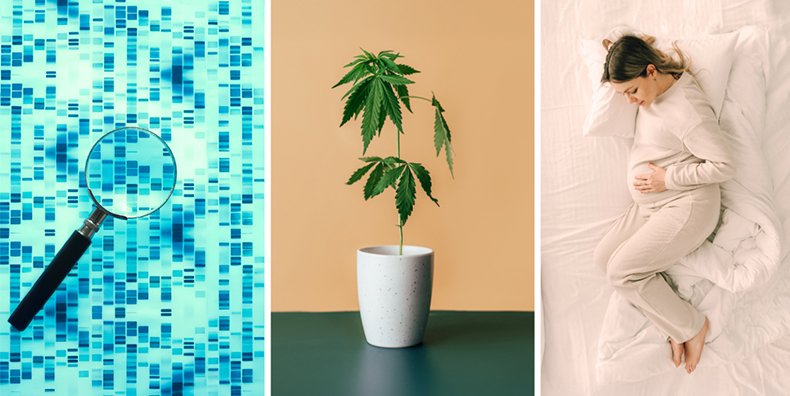

How 3 new studies use modern science to explore age-old questions and support people living with bipolar disorder today.
Key Takeaways
- New research suggests mania may drive much of bipolar disorder’s distinct genetic signature, which could one day support earlier diagnosis and more tailored treatment.
- A large teen study found cannabis use was linked to a higher later risk of bipolar, psychotic, depressive, and anxiety disorders.
- A small pregnancy study offered reassurance that poor sleep did not appear to worsen birth or newborn outcomes, though sleep still matters for mood stability.
_________________
Each month, the science of bipolar disorder races forward. But it often draws on the past — sometimes the very distant past — to get there.
When the ancient Greek physician Hippocrates described mania and melancholia, in what is perhaps the world’s earliest account of bipolar disorder — according to a paper tracing the history of how people have understood the condition — he couldn’t have imagined that scientists some 2,000 years later would expand on his observations to uncover clues about the genetic signature for bipolar disorder. That’s exactly what a European research team recently did by zeroing in on genes related to mania.
Other researchers are taking a fresh look at issues just as enduring. One research team examined how modern access to an ancient medicinal plant — cannabis — affects risk for bipolar disorder and other psychiatric conditions. Another investigated whether one of humanity’s oldest troubles — sleepless nights during pregnancy — harms babies born to mothers with bipolar disorder.
All three studies — each published recently — take something age-old and give it a new spin, yielding findings that help people living with bipolar disorder today.
_______________________
Study Reveals the Mania Genes That Set Bipolar Apart
Bipolar disorder is sometimes described as depression plus mania. While that’s an oversimplification, European scientists wondered if this idea could help unlock the genetics of bipolar disorder.
The research team took massive genetic datasets — including information from about 570,000 people with major depression and 27,000 people with bipolar disorder — and used advanced statistics to “subtract” the genetic influences of depression from bipolar disorder. What remained was a clearer picture of the genes driving mania, the high-energy, often disruptive episodes that make bipolar disorders unique from other mental health conditions.
The results, recently published in Biological Psychiatry, were striking. Mania appears to account for about 80 percent of bipolar disorder’s SNP-based genetic signal, with genes linked to depression making up the rest. The team identified 71 genetic variants linked specifically to mania, including 18 that were not previously associated with bipolar disorder.
What This Means for You
- Earlier, Clearer Diagnosis Right now, many people with bipolar disorder start seeking care during a depressive episode and get misdiagnosed with major depression, too often delaying proper care by years. In the future, these mania-specific genes could help power screening tools to spot bipolar disorder earlier, getting you the right support faster.
- Steps Toward Personalized Treatment Each genetic variant discovered in this study likely triggers small changes in the brain and body that may contribute to bipolar disorder, though there’s still more to learn about each one. Some are already known to affect calcium channels — structures that help regulate mood and brain cell communication — which have also been linked to schizophrenia and autism. Understanding these variants could support precision medicine, in which treatments are matched to your unique biology, leading to less trial-and-error and better outcomes. People with calcium channel variants, for instance, might respond especially well to lithium, which works partly by regulating those channels.
- More Research to Make These Discoveries Real-World Ready These findings are promising, but the data came mostly from people of European ancestry and from group-level statistics. More diverse research and clinical trials are needed before these discoveries can be translated into tools that can improve everyday life for people living with bipolar disorder.
_______________________
Teen Cannabis Use Linked With Future Bipolar Disorder, Study Finds
Pot. Weed. Cannabis. Whatever you call it, its use is booming in the United States, including for adolescents. But how does this early use affect future mental health, including the risk of bipolar disorder?
A California research team followed a huge group of teens — almost half a million — until their 26th birthdays to find out. Following such a big, population-based group lets researchers see real‑world patterns, not just what happens in small or highly selected samples, so the results are more likely to apply broadly.
At routine well-child visits, teens ages 13 to 17 who had no history of mental health conditions filled out health surveys that asked whether they’d used cannabis in the last year. Researchers then used statistical methods to compare these survey answers with the teens’ medical records to see whether cannabis use was linked with later mental health diagnoses.
Teens who reported cannabis use had about twice the risk of later being diagnosed with psychotic or bipolar disorders, and a smaller — but still meaningful — increase in risk for depression and anxiety, compared with teens who did not report cannabis use. These links remained even after the researchers accounted for alcohol, other drugs, and past mental health conditions. On average, about two years passed between when teens first reported cannabis use and when they received a mental health diagnosis.
The findings, published in JAMA Health Forum, suggest that using cannabis in adolescence may add to the underlying risk for mental health conditions. Because this was an observational study, it cannot prove that cannabis use causes these conditions, but it does show a strong association with increased risk. This highlights the value of delaying or avoiding cannabis use, especially for young people who are already vulnerable to mood disorders.
What This Means for You
- Using cannabis to cope may backfire over time. Many turn to cannabis to cope with tough emotions or stress, thinking it’s a natural, safe option. But these results suggest that, over time, cannabis use may actually increase the risk of mental health problems instead of easing them. If you notice that you’re leaning on cannabis to manage mood or anxiety, that pattern is important to share with your treatment team so you can work together to find tools that support rather than undermine your progress.
- Age matters. The strongest links between cannabis use and later mental health conditions showed up when cannabis use began in the teen years. The added risk for depression and anxiety seemed to lessen by the early twenties. If you’re an adolescent — or parent of one — delaying or limiting cannabis use now may pay off in better mental health later.
- Cannabis use is a risk factor you can control. Many risk factors for bipolar disorder (like genetics) are not within your control, but cannabis use is. Choosing to avoid or minimize cannabis — especially frequent use of high THC products, which appears to be tied to greater mental health risk — can be one way to take control and lower your odds of bipolar disorder and other mental health conditions.
_______________________
Reassurance for Moms-to-Be on Sleep and Infant Health
When you have bipolar disorder, sleep is a big deal — it’s both a symptom of and a trigger for mood episodes. Pregnancy often makes it even tougher. But should you lose sleep worrying about how those restless nights might affect your baby?
A new study in the Journal of Affective Disorders offers reassurance. Researchers tracked 65 pregnant Dutch women with bipolar disorder using smart watches, sleep diaries, and mood scales to check if second- or third-trimester sleep problems predicted tougher labors or poorer newborn outcomes.
For most participants, sleep was less than ideal, averaging fewer than seven hours nightly and below-ideal efficiency. But outcomes were healthy: normal gestational ages, birth weights, Apgar scores, and labor durations. At first, shorter second-trimester sleep did hint at a higher risk for cesarean delivery, but that faded after taking into account other factors known to increase C-section risk. No other clear links showed up.
The results suggest that, at least for this group of women receiving specialized psychiatric and obstetric care, prenatal sleep challenges didn’t spell trouble for delivery or infants.
What This Means for You
- Poor sleep during pregnancy doesn’t appear to hurt your baby. Many moms-to-be with bipolar disorder had imperfect sleep, yet overall obstetric and newborn outcomes stayed within healthy ranges.
- Sleep’s connection to mood risk still stands. Even though poor sleep did not meaningfully predict birth or newborn complications in this study, the scientists stressed that sleep still matters for pregnant people with bipolar disorder. Getting enough sleep supports your well-being and lowers your risk for perinatal mood episodes, which benefits you — and your baby.
Editorial Sources and Fact-Checking
- Hendriks SM et al. Sleep and Bipolar Disorder: Associations with Delivery and Neonatal Outcomes. Journal of Affective Disorders. May 1, 2026.
- Angst J et al. Bipolarity From Ancient to Modern Times: Conception, Birth, and Rebirth. Journal of Affective Disorders. December 2001.
- Merola GP et al. Isolating the Genetic Component of Mania in Bipolar Disorder. Biological Psychiatry. January 27, 2026.
- Young-Wolff KC et al. Adolescent Cannabis Use and Risk of Psychotic, Bipolar, Depressive, and Anxiety Disorders. JAMA Health Forum. February 20, 2026.