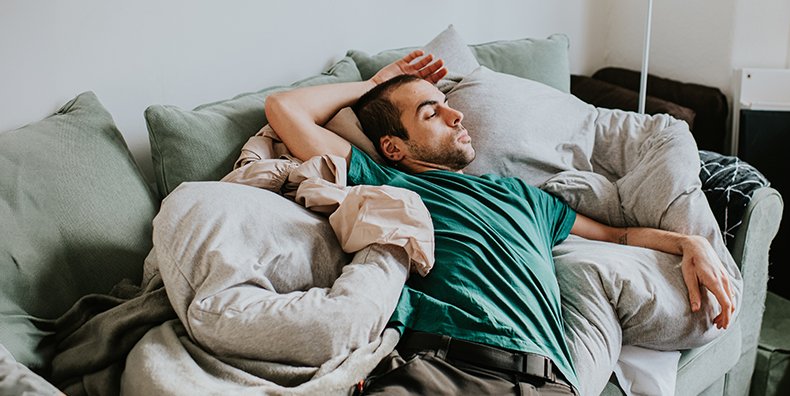

Oversleeping with bipolar disorder is not laziness. It may be hypersomnia, a sleep symptom that can affect mood, energy, and daily life.
Key Takeaways
- Sleeping too much can disrupt your body clock (circadian rhythm), which may make mood symptoms harder to manage.
- Hypersomnia is more than feeling tired. It can mean sleeping much longer than usual, needing frequent naps, struggling to wake up, and still not feeling rested.
- Changes in sleep — like oversleeping, needing naps, or difficulty waking — can be early signs of a mood shift.
- Hypersomnia can make it harder to keep up with daily routines, including medication schedules, appointments, and self-care.
When bipolar depression takes hold, it can feel like carrying an invisible weight that pins you to your bed. You’re not just tired. You’re relentlessly exhausted. The idea of getting “up and at ‘em” seems impossible.
This overwhelming need to sleep — yet never feeling rested — can be a sign of “hypersomnia.” Hypersomnia means you sleep for long periods or take lots of daytime naps without feeling refreshed.
In bipolar disorder, hypersomnia doesn’t get as much attention as insomnia. But hypersomnia can do just as much harm. It may leave you feeling as though life is slipping by while you’re stuck under the covers.
Sleep isn’t just about rest for those with bipolar disorder. It’s deeply connected to mood stability. Disruptions to sleep and circadian rhythms can serve as both a warning sign and a trigger for mood episodes. Understanding this link can be the first step toward feeling more control.
What Is Hypersomnia in Bipolar Disorder?
Anyone can feel tired after an awful night’s sleep. But hypersomnia, a common challenge of bipolar disorder, hits harder.
“Hypersomnia brings persistent daytime sleepiness, even if a person has plenty of rest,” says Joel Frank, PsyD, a clinical psychologist specializing in neuropsychology in private practice in Sherman Oaks, California. “General sleepiness, on the other hand, is usually temporary and caused by things like lack of sleep or stress.”
When you have hypersomnia, you may experience these symptoms, according to Cleveland Clinic:
- Exhaustion after getting plenty of sleep (at least seven hours)
- Falling asleep several times throughout the day
- Feeling unrefreshed when you wake up
- Taking a long time to wake up
- Frequent drowsiness
Hypersomnia isn’t unique to bipolar disorder. Primary hypersomnia has no known cause, unlike hypersomnia caused by bipolar disorder, per Cleveland Clinic. Narcolepsy type 1, narcolepsy type 2, Klein-Levin syndrome, and idiopathic hypersomnia are all primary hypersomnias.
In contrast, the kind of hypersomnia you have with bipolar disorder is often called “secondary hypersomnia” since it’s the result of another known cause. Other medical conditions, medications, or alcohol, or not getting enough sleep, can also cause secondary hypersomnia.
How Is Bipolar Hypersomnia Different From Depression Fatigue, or Medication Side Effects?
Hypersomnia, depression fatigue, and sleepiness from medication can seem alike, but they’re not always the same. With hypersomnia, people often sleep long periods, nap frequently, or have trouble waking up and still feel tired.
Depression fatigue often feels like deep tiredness, low energy, or no motivation, even if you’re not sleeping more than usual. Side effects from medication can appear after starting a new prescription, changing your dose, or taking medicine at a different time.
Since these symptoms can occur together, try to note when your sleepiness began, how much you’re sleeping, whether your mood has changed, and whether you changed any medications around the same time. This can help your healthcare provider figure out what might be causing your tiredness.
Hypersomnia vs. Insomnia
Insomnia — another common sleep disorder in people with and without bipolar disorder — features problems falling and staying asleep, per MedlinePlus.
It’s possible to have both insomnia and hypersomnia symptoms at the same time, according to research on sleep disorders.
Current research suggests that insomnia is the leading sleep problem for people with bipolar disorder. But hypersomnia may be more common than it appears. Why?
It could be a reporting issue. People tend to notice and tell their providers about insomnia more quickly, says Michelle Dees, MD, a psychiatrist in private practice in Chicago.
“On the other hand, hypersomnia is believed to be understudied or is sometimes confused with regular fatigue instead of being recognized as a symptom,” says Dr. Dees, adding that people with hypersomnia can also be labeled as lazy, and their sleep issue is ignored. Stigma and difficulty recognizing hypersomnia may mean many cases remain hidden.
The Link Between Bipolar Depression and Hypersomnia
Bipolar disorder is known for wreaking havoc on your sleep. Almost everyone in a manic episode (up to 99 percent) reports needing less sleep, according to one research review.
On the flip side, feeling like you’re not getting enough sleep is more typical of depressive episodes. During bipolar depression, somewhere between 23 and 78 percent of people may experience hypersomnia, according to the same review.
When Hypersomnia May Signal an Oncoming Depressive Episode
Sometimes, extra sleep is simply your body catching up after stress, travel, illness, or a run of poor sleep. But hypersomnia may be a warning sign of bipolar depression when it comes with other mood changes or starts to interfere with daily life.
Watch for patterns such as:
- Sleeping much longer than usual for several days in a row
- Needing naps even after a full night’s sleep
- Feeling unrefreshed, no matter how much you sleep
- Having more trouble getting out of bed, showering, eating, or keeping appointments
- Losing interest in people, routines, or activities that usually help you feel grounded
- Feeling more hopeless, guilty, slowed down, or emotionally numb
If these changes feel familiar, they’re worth bringing up with your healthcare provider early. Catching a shift in sleep before depression fully takes hold may make it easier to adjust your care plan and protect your stability.
Factors That Influence Sleep Problems in Bipolar Disorder
Plenty of things can influence sleep challenges in bipolar disorder. “Factors that play a role include hormones, neurotransmitter imbalances, and circadian rhythm irregularities,” says Mike McGrath, MD, a psychiatrist in private practice in Rancho Mirage, California.
Here’s how these factors can affect your sleep:
- Bipolar Type Whether you have bipolar 1 or 2 may be linked to the pattern of sleep problems you have. Hypersomnia appears to be more common in bipolar 1 disorder, while insomnia seems to be more common in bipolar 2 disorder. But more research is needed to confirm that pattern.
- Mood State Sleep patterns can change when mood states change, and hypersomnia appears to be more common during depressive episodes. But other research suggests that it can happen during other mood states — and even during stable periods between manic and depressive episodes — as well.
- Age The type of sleep challenges you face with bipolar disorder can change as you age. Young people with bipolar disorder are more likely to experience hypersomnia, while those who are older may find insomnia more troublesome, according to a research report.
- Neurotransmitters Some of the brain’s chemical messengers that are known to be disturbed in bipolar disorder (including dopamine) play an important part in regulating your sleep-wake cycle, according to a scientific paper on sleep patterns in bipolar disorder.
- Hormones Hormonal changes linked with bipolar disorder can also make it harder to sleep normally. For example, research suggests that cortisol, a stress hormone, increases during bipolar depression.
- Medications Prescriptions that help you manage your bipolar symptoms, such as some antidepressants, can sometimes make sleep problems worse.
- Circadian Rhythm Disruptions “Hypersomnia often occurs during depressive episodes due to disruptions in the body’s sleep-wake cycle,” says Dr. Frank. Bipolar depression can influence your sleep-wake cycle for the worse by interrupting deep sleep, increasing the time it takes to fall asleep, and waking you up more often through the night, according to a summary of research findings. Simply put, your circadian rhythm is your body’s internal clock. It signals your brain when to wake up, when to get sleepy, and when to release certain hormones. If you oversleep and your clock shifts later, your sleep, meals, light exposure, medication schedule, and daily routines can all fall out of sync. For people with bipolar, this disruption can make it harder to manage mood and may raise the risk of mood symptoms.
How Excessive Sleep Impacts Daily Life With Bipolar Disorder
Too much sleep with bipolar disorder can have an enormous effect on your daily life. According to Dr. McGrath, when you have hypersomnia, you may find it hard to do these everyday tasks:
- Go to work or school
- Stay awake without napping several times
- Wake up and get ready in time for appointments
- Keep up with your responsibilities
If you have hypersomnia, these signs and symptoms can make fulfilling many other day-to-day responsibilities difficult, according to StatPearls:
- Sleep Drunkenness Feeling confused and disoriented after waking, also called prolonged sleep inertia
- Automatic Behavior Like staring into space or saying things that don’t make sense
- Brain Fog Problems with thinking, concentration, memory, and decision-making
Having hypersomnia can be tough for anyone, but there are added consequences when you’re also managing bipolar disorder. Extreme fatigue with bipolar depression can worsen already low self-esteem, says Dees. “This can emerge in missed timing for taking medicine, lack of sufficient social and occupational activities, and a more destabilized mood.”
How Hypersomnia Affects Bipolar Symptoms
Hypersomnia may worsen depressive symptoms and affect the overall management of bipolar disorder. “It can interfere with crucial aspects of treatment, such as adhering to prescribed medications, attending therapy sessions, and practicing self-care routines,” says Frank.
In other words, hypersomnia makes it harder to care for yourself. “Over time, this creates a vicious cycle of fatigue, low motivation, and worsening symptoms, making bipolar disorder more complicated to manage effectively,” says Frank.
But noticing that you are experiencing hypersomnia could make one thing easier: Predicting a mood episode. One study found that longer sleep and trouble falling asleep and waking up were usually followed by bipolar depression, while other sleep changes may come before a manic or hypomanic episode.
Having hypersomnia may also help clarify a diagnosis of bipolar disorder (rather than major depressive disorder), research suggests. It’s possible that tracking your sleep, especially any hypersomnia symptoms, could give you a clearer picture of your mental health.
Managing Hypersomnia in Bipolar Disorder
“Hypersomnia can exacerbate feelings of guilt, frustration, and hopelessness in individuals, as they may perceive their condition as a lack of willpower or effort,” says Frank.
Excessive sleepiness has nothing to do with your willpower. It’s a symptom, not a choice. Still, with the right strategies, you can work toward improving your sleep and reducing hypersomnia and related bipolar symptoms.
- Embrace a routine. Try to go to bed and wake up at the same time — seven days a week — to help balance your circadian rhythm.
- Watch alcohol and caffeine. Poorly timed caffeine can make it tough to fall asleep, and alcohol can disrupt your sleep through the night, according to Mayo Clinic.
- Create a sleep-friendly space. Make your sleep space more restful with comfortable bedding, a cool room, fewer screens, white noise, and as little light as possible.
- Ask about light therapy. Exposure to bright light at certain times of day may help train your circadian rhythm for better sleep, per Harvard Health. However, be sure to talk to your healthcare provider first, as light therapy can sometimes trigger hypomania or mania.
- Ask about CBT-I. Cognitive behavioral therapy for insomnia (CBT-I) guided by a health professional can help retrain your thoughts and behaviors around sleep, according to Stanford Health Care.
- Ease stress. Although it’s easier said than done, you can reduce stress in your life through mindfulness techniques such as meditation, deep breathing, body scanning, and yoga.
- Move your body. Regular exercise during the daytime can help your body and mind get better rest at night, according to a review of research on the link between physical activity and sleep disorders.
- Eat with sleep in mind. Your diet can also influence your sleep, according to a review of the research. Evidence suggests that complex carbohydrates, sleep-friendly nutrients, such as melatonin and tryptophan, and fiber may support better sleep. The research also suggests that limiting saturated fats and sugars may help, too.
- Talk about medication timing or changes. Sometimes, healthcare providers will recommend a medication change to help with sleep.
No matter how you address your rest, it’s important to keep your care providers in the loop. They can work with you to understand what’s stealing your sleep and help you make a plan to get good rest.
Editorial Sources and Fact-Checking
- Hypersomnia. Cleveland Clinic. October 27, 2021.
- Insomnia. MedlinePlus. September 13, 2024.
- Soehner AM et al. Prevalence and Clinical Correlates of Co-Occurring Insomnia and Hypersomnia Symptoms in Depression. Journal of Affective Disorders. October 1, 2015.
- Steinan MK et al. Sleep Problems in Bipolar Disorders: More Than Just Insomnia. Acta Psychiatrica Scandinavica. November 21, 2015.
- Guerrera CS et al. A Narrative Review on Insomnia and Hypersomnolence Within Major Depressive Disorder and Bipolar Disorder: A Proposal for a Novel Psychometric Protocol. Neuroscience & Biobehavioral Reviews. March 2024.
- Grigolon RB et al. Hypersomnia and Bipolar Disorder: A Systematic Review and Meta-Analysis of Proportion. Journal of Affective Disorders. March 2019.
- Parker G et al. Sleeping in? The Impact of Age and Depressive Sub-Type on Hypersomnia. Journal of Affective Disorders. January 2006.
- Why Sleep Rhythm Is Important for Bipolar Disorder? Psychiatry and Clinical Psychopharmacology. March 21, 2021.
- Lyu N et al. Hormonal and Inflammatory Signatures of Different Mood Episodes in Bipolar Disorder: A Large-Scale Clinical Study. BMC Psychiatry. June 20, 2023.
- Gold A et al. The Role of Sleep in Bipolar Disorder. Nature and Science of Sleep. June 29, 2016.
- Dhillon K et al. Idiopathic Hypersomnia. StatPearls. July 31, 2023.
- Ulrichsen A et al. Do Sleep Variables Predict Mood in Bipolar Disorder: A Systematic Review. Journal of Affective Disorders. December 29, 2024.
- Ng TH et al. Sleep-Wake Disturbance in Interepisode Bipolar Disorder and High-Risk Individuals: A Systemic Review and Meta-Analysis. April 2015.
- Sleep Tips: 6 Steps to Better Sleep. Mayo Clinic. May 7, 2022.
- Liebson E. Can Light Therapies Help With Bipolar Disorder? Harvard Health. February 18, 2020.
- CBTI. Stanford Health Care.
- Alnawwar MA et al. The Effect of Physical Activity on Sleep Quality and Sleep Disorder: A Systematic Review. Cureus. August 16, 2023.
- Binks H et al. Effects of Diet on Sleep: A Narrative Review. Nutrients. March 27, 2020.
UPDATED: Originally published February 13, 2025