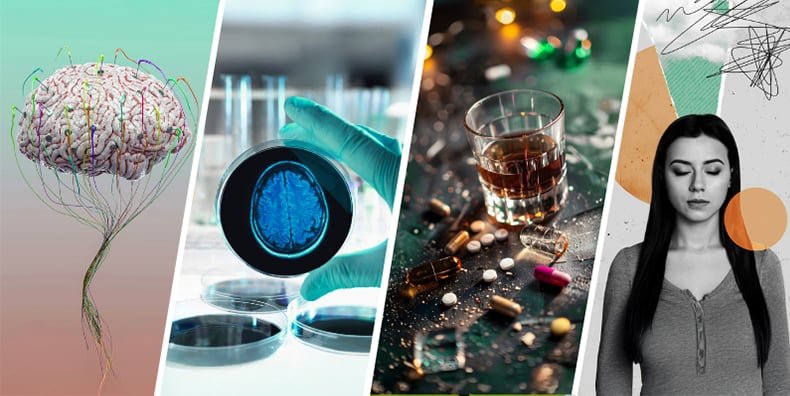

From brain scans revealing medication’s effects to AI-powered detection using lab models, here are 5 new developments in bipolar disorder research.
When you live with bipolar disorder, you’re like anyone else in many ways. You care deeply about certain things. Others frustrate you.
But bipolar disorder also leads to some experiences that people without it often can’t relate to. The fact is: Your brain works differently — and that difference requires specialized support.
While the science has come a long way, even experts don’t fully understand these differences or which treatments work best. But research is steadily bringing clarity. Five new studies explore these important questions about what sets the experience of bipolar disorder apart and what helps manage it:
- How do scans of bipolar brains stand out? Can you see how medication changes the brain?
- Could scientists use AI to detect bipolar disorder using mini-brains grown from skin samples?
- Could treating bipolar disorder prevent future substance use problems?
- Is it common to experience ups and downs outside of mood episodes?
- How might traditional CBT be tweaked to better support young people at risk of bipolar disorder?
Bipolar Treatment May Change This Part of Your Brain
Sometimes it’s hard to know if your bipolar medication is working. Wouldn’t it be nice to look inside your brain and check?
Researchers did exactly that using advanced neuroimaging technology. Their findings, published in the Journal of Affective Disorders, suggest that bipolar medications actually change activity in one key brain area.
What the Research Says
The research team enlisted the help of 160 people. Because 77 of them lived with bipolar disorder and 83 didn’t have any mental health conditions, they could compare the groups to learn what patterns made bipolar brains unique.
Each person lay in an fMRI scanner, which measures changes in blood flow in the brain. They were told to lie still, shut their eyes, and stay awake, according to another scientific paper the team published describing the procedure. This allowed the researchers to see which parts of the brain showed activity when the participants were at rest.
The resting-state fMRI showed that — compared with people without the condition — people with bipolar disorder had more activity in two areas of the brain:
- Salience Network This brain network constantly keeps track of what’s happening inside your body, in your thoughts, and around you. It quickly decides which brain systems should take control to help you respond to important developments.
- Dorsal Attention Network This brain network helps you stay focused on things outside yourself to reach your goals. It helps you maintain steady attention on tasks, like reading a book, and blocks out distractions.
Here’s where it gets interesting. The researchers asked the group with bipolar disorder to take psychiatric medication for three months, then return to the lab for another fMRI scan. They weren’t testing a specific medication regimen. Participants took whatever medications they’d been prescribed, including lithium, quetiapine (Seroquel), olanzapine (Zyprexa), and other common medications for bipolar disorder.
Thirty-eight people came back for the follow-up brain scan. The question was simple: Would medication change how their brains functioned at rest?
The answer was yes — partially. Some areas of the salience network seemed to calm down, looking more like those in people without bipolar disorder. But the dorsal action network looked the same as before treatment.
The researchers also used the Allen Human Brain Atlas to identify genes that might be connected to the initial fMRI findings. Future research would need to confirm whether people with bipolar are more likely to actually have these genetic variants than people without.
Why It Matters
These results suggest that your brain shows different activity patterns in certain areas when you live with bipolar disorder. They also indicate that you could potentially measure bipolar treatment effectiveness by tracking changes in these patterns. Medications seem to help regulate the salience network, a part of the brain that helps decide how you respond to changes. Related genetic findings suggest that your genes may play a role in shaping the increased brain activity seen before treatment.
What This Means for You
- The bipolar brain works differently — and that’s measurable. When resting, people with bipolar disorder show different activity patterns in two key brain areas (the salience network and dorsal attention network) compared with people without the condition, the results suggest. This neuroimaging evidence can be validating — it confirms your brain genuinely operates differently, not just in how you feel, but in measurable ways.
- Bipolar medication may reshape your brain activity. These findings suggest that medications create real changes in how your brain works. This can offer reassurance and hope that taking medication actually helps to regulate your brain’s functioning.
- The real-world picture still needs clarity. This research shows brain changes before and after treatment, but the researchers didn’t measure whether those changes were connected to symptom improvement or quality of life. They also didn’t dig into whether the genetic findings can be verified in people living with bipolar disorder. So while this study is an important step toward understanding the biology of bipolar disorder, more research is needed to translate it into practical guidance.
*****
Machine Learning Reliably Detects Bipolar Disorder in Lab-Grown Mini Brains
Could lab-grown brains help diagnose bipolar disorder? It might sound like science fiction, but researchers in Baltimore and Boston are making it a reality.
Their findings, published recently in APL Bioengineering, suggest that these “mini-brains” could one day transform how bipolar disorder is diagnosed and treated.
What the Research Says
To grow the mini-brains, called brain organoids, the researchers took skin samples and reprogrammed them to become brain cells using advanced stem cell technology.
The samples came from a dozen people: four living with bipolar disorder, four with schizophrenia, and four without any mental health condition. By growing mini-brains from people with different diagnostic statuses, the researchers hoped to see whether they could distinguish among them.
They focused on the mini-brains’ electrical activity and whether these patterns could be used to distinguish brains from each group.
That’s because brains are made of neurons, which use electrical and chemical signals to communicate, according to StatPearls. Other research suggests this electrical activity can be disrupted in bipolar disorder and schizophrenia, the researchers noted.
When the mini-brains were ready, electrodes recorded the electrical activity at rest and after applying electrical stimulation, helping the researchers see how the mini-brains responded to stress.
Using machine learning, the researchers analyzed these electrical patterns to see if they could pinpoint which group each mini-brain came from.
Their results were striking: The algorithm could identify which mini-brain came from which group with 83.3 percent accuracy at rest. With electrical stimulation, that percentage jumped up to 91.6.
Why It Matters
By pairing advanced biological and computer science technologies, this study moves the field closer to finding objective biomarkers for bipolar disorder. If future research confirms these findings, lab-grown mini-brains could help refine both diagnosis and treatment.
What This Means for You
- It’s possible at the electrical level to identify bipolar disorder. While this technology isn’t ready for clinical use yet, the results of this study suggest that bipolar has a unique electrical signature that a well-designed algorithm can detect, which could someday improve diagnostic accuracy and speed.
- Someday, mini-brains could trial meds so you don’t have to. The researchers note that this technology could eventually be used to help guide personalized psychiatric treatment. Instead of trialing drugs like lithium or lamotrigine (Lamictal) yourself, your mini-brain — or one showing similar patterns to yours — could be exposed to the medications and then observed to see if the electrical activity normalizes. This clinical application is still a ways away, but the results of this study lay the groundwork.
- Big questions remain. This technology is still in its early stages. The study was small — involving just 12 people total — and growing mini-brains is a painstaking process that takes nine months. More research is needed to prove that the results apply broadly and to streamline production before they can be used in hospitals or clinics.
*****
To Reduce Substance Use Risk, Stick With Bipolar Treatment, Study Says
If you’re among the approximately 60 percent of people with bipolar disorder who also have a substance use disorder, you know how overwhelming it can be. Managing bipolar symptoms is already challenging, and adding substance overuse to the mix makes it even harder to keep your life on track.
Some research suggests that treating your mental health might help prevent substance use problems later on. But other studies don’t find a clear benefit.
A Boston-based research team decided to look deeper, asking not just whether bipolar treatment helps, but whether how long you stay in treatment matters. Their findings, published in the Journal of Mood & Anxiety Disorders, suggest that it does.
What the Research Says
The research team asked a simple but important question: Can treating bipolar disorder or major depressive disorder in young people help prevent a substance use disorder in the future?
To find out, they decided to review hospital records from Mass General Brigham in Boston for young people (ages 16 to 30) with bipolar disorder or major depressive disorder — but no history of substance use disorder. They found almost 4,400 patients fitting this profile, about 800 of whom had bipolar disorder.
The researchers examined the health records over time — for those with bipolar disorder, this was for an average of more than three years — noting two key details:
- Mental Health Treatment For people with bipolar disorder in this study, “being treated” meant their medical records showed they stuck with a psychiatric medication for at least four weeks at an effective dose or went to at least six therapy sessions in six months.
- Substance Use Disorder The researchers tracked non-nicotine substance use disorders by looking for related insurance billing codes.
Then, the researchers used statistical analysis to see the relationship between mental health treatment and substance use disorders. Here’s what they found:
- Starting treatment wasn’t enough to prevent future substance use disorders. When the researchers compared people with bipolar disorder or major depression who entered treatment with those who didn’t, there wasn’t a statistically significant difference in outcomes. The results suggest that a couple of months of mental health treatment doesn’t protect against a substance use disorder.
- Staying in treatment did help cut down on the risk of substance use disorder. For each month people with bipolar disorder continued with treatment, their odds of having a substance use disorder dropped by 2.6 percent (for people with major depression, the monthly risk reduction was 2.1 percent). While this might sound small, it adds up fast. After a year of continuous bipolar treatment, the risk would fall by about 26 percent. The findings suggest that the longer participants stayed in treatment for bipolar disorder, the more likely they were to be free from substance use disorders.
Why It Matters
Being consistent with your mental health treatment does more than help you feel better right now — it may also protect you from developing substance use problems in the future, these results suggest.
What This Means for You
- Treatment alone isn’t a guarantee. Just trialing a medication or starting a therapy won’t do much to protect you from substance use problems down the road. The real benefits begin when you stay with treatment over the long term.
- The longer you stick with bipolar treatment, the more protected you’ll be from developing a substance use disorder. Each month you stick with bipolar treatment boosts your chances of avoiding a substance use disorder. That means every month is a win. Because the benefits compound over time, don’t give up even when progress feels slow.
- Talk about substance use with your care team. Mental health treatment helps protect you, but it’s not a guarantee against substance use problems. So be honest with your psychiatrist, therapist, or loved ones if you’re worried about the role of substances in your life. Remember: Recovery is possible. Many people living with bipolar disorder have found effective paths for recovery from substance use disorders.
*****
Ongoing Mood Instability May Be a Core Bipolar Symptom
Bipolar disorder — characterized by episodes of mania and depression — is a condition of mood instability interspersed with more balanced moods. But many people with bipolar disorder say that even during these stable periods, their mood feels like it is more up and down than most.
An American research team took these reports seriously, investigating the fluctuations in mood symptoms that can happen between mood episodes. Their results are detailed in a new paper in Nature Mental Health.
What the Research Says
Everyone’s emotions shift from moment to moment. You might feel happy that your mom made you a bowl of your favorite soup, then irritated when you take a bite and discover she left out the onions you love. This is called affective instability, and it’s just part of the human experience.
Mood instability — which the researchers define as “frequent and/or intense fluctuations in mood over time” — is different. Mood instability has to do with longer, more sustained feeling states. Think weather (emotions) versus climate (mood).
Studying mood states can be difficult, requiring participants who are willing to share how they’re doing in great detail over long periods of time. Fortunately, the Prechter Longitudinal Study of Bipolar Disorder at Michigan Medicine is powered by exactly this type of generosity. Researchers in this study were able to use data from the bigger study to ask three important questions about mood instability in bipolar disorder:
- Can people with bipolar disorder be grouped into distinct patterns based on their mood instability?
- What factors predict who will experience more mood instability?
- Does mood instability predict how someone will be doing in the future?
This is a larger study than most others that have previously investigated similar questions. It included 481 participants with bipolar disorder who completed surveys about every two months for five years — around 30 surveys per person. That’s a lot of data. Thanks to advanced statistical modeling and machine learning, the research team could interpret the information participants provided and identify patterns. Here’s what they found:
- Mood Instability Patterns The results of the study found that participants generally fell into three groups: low, moderate, and high mood instability. The vast majority (78.5 percent) had moderate or high mood instability, suggesting that mood instability is the norm among people living with bipolar disorder.
- Predictors of Mood Instability Seven key predictors stood out as most important in determining which group someone fell into: neuroticism, poor sleep quality, childhood emotional neglect, childhood physical abuse, stimulant abuse, earlier age when hypomania first appeared, and more lifetime depressive episodes. In each case, experiencing more of the predictor was linked with more mood instability.
- Long-Term Consequences Did being in one group or the other matter outside of itself? For the participants of this study, yes. Worse mood stability was linked with having a harder time at work and at home, worse mental health, and higher suicidal ideation.
Why It Matters
Right now, bipolar disorder is often treated as having distinct mood episodes separated by periods of stability. But this study suggests that ongoing mood instability is a core feature of the condition for most people — and it has real consequences.
What This Means for You
- Your experience of ongoing mood shifts is real and significant. This study confirms that mood instability in bipolar disorder is common, with about 4 out of 5 people experiencing moderate to high mood instability outside of episodes. This variability matters for your well-being and is worth discussing with your treatment team.
- Certain factors signal higher risk for problematic mood instability — and many are addressable. If you struggle with sleep, experienced childhood trauma or mistreatment, or use stimulants, you’re more likely to have difficulty with your mood outside of bipolar episodes, these findings suggest. Fortunately, treatments exist that can help you improve sleep, process trauma, and confront problematic substance use. While addressing each can improve your health generally, this study suggests it could also provide particular relief from mood instability in bipolar disorder.
- Don’t ignore ongoing mood instability. It might be tempting to write off mood instability as “not that bad” or as something you can just white-knuckle your way through. But these results suggest mood instability is linked with real impacts on your day-to-day life. Addressing mood instability itself may be a new target for bipolar treatment that makes a real difference.
- Track your mood. No really. Mood tracking is a basic in bipolar care. It’s often explained as a way to stay ahead of mood episodes. But these results suggest that regularly tracking your mood may help you understand the role ongoing mood instability plays in your life — a separate, meaningful aspect of living with bipolar disorder. Understanding your unique patterns could lead to more personalized, effective care.
*****
Podcast Features Research on Supporting Young People Before They’re Even Diagnosed
When you think of BART, what do you think of? Maybe a yellow cartoon boy or the Bay Area’s transit system.
But there’s another BART that everyone with bipolar disorder should know: The Bipolar At-Risk Trial. A new episode of The Research Room podcast explores how this clinical trial could help change the trajectory of young people with risk factors for bipolar disorder.
What You Should Know
The Research Room podcast, produced by the York Trials Unit at the University of York in England, gives the public an insider’s view of healthcare research. Think of it as a friendly chat with scientists who genuinely love their work.
In “The BART Study: Supporting Young People at Risk for Bipolar,” you’ll hear from
They describe how the randomized control trial — which has 337 participants across five sites in England — tests a new, bipolar-tailored version of cognitive-behavioral therapy (CBT).
Why tweak standard CBT? Dr. Parker explains that people with bipolar have unique considerations that can sometimes be a mismatch with traditional CBT. For example, CBT encourages behavioral activation, where you push yourself to do activities even when you don’t feel like it. But for people with bipolar disorder who are worried about mood episodes, this can backfire. “They’re already doing too much to combat the possibility of becoming depressed,” she says. They often need to learn to rest, not do more.
Why It Matters
The BART study is trying to catch people who have early warning signs and are between ages 16 and 25, when bipolar disorder typically emerges. Why is preventative healthcare for bipolar disorder important? “There’s opportunity to nudge people back on the right back on the right path and reach their potential rather than allowing people to become really unwell and stuck in a life that isn’t the one they should be living,” says Parker.
Key Takeaways
- Researchers deeply value lived experience. The podcast episode oozes with evidence that these researchers appreciate the inside view of those who live with bipolar disorder. Parker talks about how listening to young people and their families drives her passion for her work. The study itself includes an additional qualitative component led by a researcher who personally has lived experience of mental health conditions.
- Advocate for yourself early. While the study’s results haven’t been published yet, the big-picture insight is already clear: Early intervention can matter a great deal. If you’re experiencing mood swings and you know you have risk factors for bipolar disorder — like a close family member with bipolar — don’t wait for things to get worse before seeking help.
- Listen now. The episode is available on Spotify, Apple Podcasts, or wherever you get your podcasts.
Editorial Sources and Fact-Checking
- Episode 9: The BART Study: Supporting Young People at Risk for Bipolar. The Research Room. September 24, 2025.
- Zhang C et al. Neuroimaging Changes in Pre-Treatment and Post-Treatment Patients With Bipolar Disorder and Their Relationship With Genetic Characteristics. Journal of Affective Disorders. November 1, 2025.
- Zhang C et al. Fractional Amplitude of Low-Frequency Fluctuations in Sensory-Motor Networks and Limbic System as a Potential Predictor of Treatment Response in Patients With Schizophrenia. Schizophrenia Research. May 2024.
- Allen Brain Atlas: Data Portal. Allen Institute for Brain Science. 2025.
- Chen K et al. Machine Learning-Enabled Detection of Electrophysiological Signatures in iPSC-Derived Models of Schizophrenia and Bipolar Disorder. APL Bioengineering. September 22, 2025.
- Ludwig PE et al. Neuroanatomy, Neurons. StatPearls. July 24, 2023.
- Yule AM et al. An Examination of the Impact of Treatment on Later Risk for a Substance Use Disorder in Young People With Major Depressive Disorder and Bipolar Disorder. Journal of Mood & Anxiety Disorders. December 2025.
- Stromberg AR et al. Modeling and Predicting Mood Instability in a Longitudinal Cohort of Bipolar Disorder. Nature Mental Health. September 22, 2025.
- Longitudinal Study of Bipolar Disorder. University of Michigan Medical School.
- BART II. JUICE.