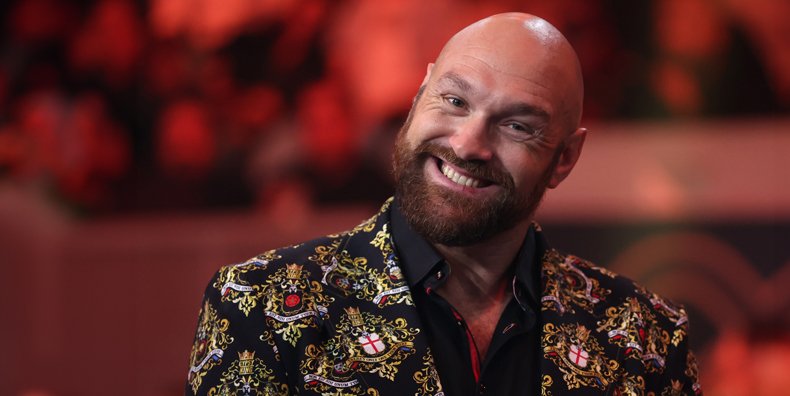

Beyond his world titles, the boxing icon opens up about the everyday habits that help him manage his moods.
Key Takeaways
- As Tyson Fury prepares for his July 24 fight, his story shows how routine can support mood stability with bipolar disorder.
- Daily movement can help provide structure, reduce stress, and support emotional regulation.
- Trusted family members, friends, or peers can help reduce isolation during difficult mood shifts.
- Meaningful goals and a sense of purpose can offer direction during recovery and ongoing wellness.
If you’re a boxing fan, you know Tyson Fury, aka “The Gypsy King,” a former world heavyweight champion whose public story includes more than his achievements in the ring. Fury has openly discussed his bipolar disorder, depression, anxiety, substance use, and the daily habits that help him stay grounded.
After announcing another retirement in January 2025 following his second loss to Oleksandr Usyk, Fury returned to the ring in April 2026 and defeated Arslanbek Makhmudov by a decisive points victory. He is now scheduled to fight Polish heavyweight Mariusz Wach on July 24 in Thailand.
But for readers living with bipolar disorder, the larger takeaway is not the outcome of any single fight — it’s how Fury has described the routines, goals, support, and physical activity that help him manage his mental health.
Those strategies reflect a broader truth about bipolar disorder: Consistency can be stabilizing. Regular sleep, structured days, movement, and supportive connections are often important parts of managing mood changes alongside professional care. Fury’s experience is not a treatment plan for anyone else, but it does offer a relatable look at how routine and purpose can support mood stability.
Fighting Back Through Bipolar Depression and Addiction
Fury has an impressive history of triumphs, including his reign as the unified heavyweight champion from 2015 to 2016. Among his notable victories are wins over Francis Ngannou in 2023, Dillian Whyte in 2022, Deontay Wilder in 2021, and Wladimir Klitschko in 2015.
But Fury’s win over Klitschko marked the beginning of a personal struggle with mental health.
He faced challenges with depression, anxiety, alcohol addiction, and cocaine abuse. In 2017, Fury was diagnosed with bipolar disorder, a fact he has openly shared, demonstrating his commitment to raising awareness and showing strength in vulnerability.
“After every high, there’s going to be a massive low,” he tells ESPN. “I knew it was coming, but I couldn’t stop it … It’s like shaking a bottle of Champagne: It’s going to explode — and it did.”
Defeating Klitschko had been a lifetime goal of Fury’s; after he achieved it, he had four world title belts and wasn’t sure what his purpose was anymore, as the bigger his achievements are, the lower his lows are, he tells sports announcer Mauro Ranallo — who also has bipolar disorder — in a SHOWTIME Sports interview.
“I just felt like an emptiness, a deep, gaping hole of nothing — darkness and gray clouds; every day was gray,” says Fury. “I felt like I had nothing to look forward to; I was worthless. It was just a horrible, horrible feeling.”
Fury questioned the true worth of his successes as he faced severe inner turmoil. For the next two years after his win against Klitschko, he was drinking heavily, wouldn’t come home for three or four days at a time, went up to 400 pounds, failed two drug tests for cocaine, was looking at a 12-year boxing ban, and owed millions of dollars in legal fees.
Then, on Halloween night in 2017, he had an epiphany and asked God to help him get better. The next morning, he started running every day, committed to getting back into boxing shape, both mentally and physically.
The Everyday Life of Tyson Fury, Beyond the Ring
Since Netflix released At Home With the Furys in August 2023, more people have become interested in Fury’s life. The docuseries follows his family, boxing career, retirement choices, and mental health. As the show continues, viewers see how Fury balances retirement, family, training, and the routines he says help his mental health.
The show features Fury at home in Lancashire, England, with his wife, Paris Fury, and their seven children. Viewers see him walking the dog, spending time with his kids, and adjusting to family life outside the boxing world. The series also looks at the challenges he faces when he steps away from the routine, purpose, and physical demands of the ring. These themes remain important as Fury continues to move in and out of retirement.
Throughout the series, Fury candidly discusses his bipolar disorder and other mental health diagnoses, including anxiety, obsessive compulsive disorder (OCD), attention deficit hyperactivity disorder (ADHD), and his struggles with substance abuse.
Drawing insights from At Home with the Furys and his interview with SHOWTIME Sports’ Mauro Ranallo, we’ve compiled a list of 11 top strategies Fury uses to manage his bipolar symptoms. These approaches help him stay on top of his game, both in and out of the boxing ring.
1. Stick to a Routine
In At Home With the Furys, the Gypsy King talks about how important it is for him to have a routine, whether it’s his daily running or the structure that comes with training and preparing for boxing.
Paris Fury says that when her husband last stopped boxing, he had an alcohol addiction and a drug addiction. “We had a really bad two or three years of our lives,” she says. “He lives with a few different mental health conditions … Tyson’s mental health dips dramatically when he doesn’t have a routine or a schedule.”
2. Exercise Regularly
To manage his bipolar symptoms, Fury says he needs to exercise daily. “If I don’t train for two days, I feel totally depressed,” he says. “Training is exercising, whether it’s jogging, biking, going for a walk — anything. You need to stimulate the mind, and I think training/working out/exercising is a perfect way to do it. [Whether you do it] a lot or a little, you must do something.”
His father, John Fury, has spoken openly about his own mental health struggles, including depression, “dark places,” and lifelong mood-related challenges, and has also described mental health problems in his family. The answer to mental health problems, he says, is exercise.
3. Set Short- and Long-Term Goals
In the docuseries, Fury is often seen making impulsive decisions, whether taking the kids camping — that very night, a school night, as Paris reminds him — or booking a trip to Europe.
“I give myself short-term goals and long-term goals,” Fury explains. “My mind goes AWOL if there’s nothing on the horizon.”
He says the goals don’t have to be big; they can be small goals that still mean something to you. “That works for me,” he says. “But what works for me might not work for the next person.”
4. Be Mindful of What You Put Into Your Body
In the series, Tyson is often seen abstaining from caffeine and alcohol, opting for non-alcoholic beer or water instead. When he visits his dad, John comments on it, seemingly impressed, saying, “No coffee, no Coke, no Zero-Cokes, no beer…”
“There was a moment in 2017 where I thought I had the antidote to the depression and the anxiety, and I was getting drunk before bed,” Fury recalls. “And it turns out that it’s only a release, the drugs and the alcohol, for a small amount of time. It’s not a long-term fix; it’s a short-term break from the problem.”
5. Spend Time in Nature to Get Grounded
Fury comes from a nomadic family; his Irish parents were part of a Traveller community known for its nomadic lifestyles and close family ties. To that end, Fury’s dad doesn’t live too far from him and sleeps in a covered wagon among a lot of greenery.
In the Netflix show, Fury visits him, sometimes with the kids, sometimes without. “It’s always good to go spend some time with my dad — the fire, the dog, and the green fields,” he says as he sips on some green tea his dad makes him before spitting it out when his dad isn’t looking because he doesn’t like the taste.
“It reminds me of good times, and it reminds me of who I am. It keeps me rooted, grounded.”
6. Try the ‘Woop Woop Effect’ Technique
When asked by SHOWTIME Sports about ways he manages his bipolar disorder, Fury shared his use of the “woop woop effect,” a technique that’s also gained attention on TikTok.
Fury explains: “Every time you feel a bit sad, or you start to feel like you’re going to go down, or you start to feel like you’re going to dip from your ‘normal’ level playing ground, you’ve got to say this, you’ve got to say ‘woop woop’ three times, very loud … and then if you aren’t smiling after that …”
7. Talk to Someone — Have Some Sort of Support System
Fury tells Ranallo that he does not have a therapist. But he does believe that talking things out is key. For him, that includes educational conversations with the guys at his boxing camp.
“We have long conversations about random things in the world at this camp,” he shares. “If you’re on your own a lot, then you’ve got time to go over your problems and dwell on them — and it’s not good. I don’t think people who manage mental health issues should be alone all the time; I think they should have regular interaction with other human beings, with other people.”
In the show, Fury talks about how supportive his family is when it comes to his mental health challenges.
He says he’s aware when his mood is dipping. “I’m up and down all the time; it’s uncontrollable, and I take it out on people around me,” he says. “Sometimes I seem very selfish. But I don’t have control of it, so … It’s not like you can pull yourself out anytime you want. You’ve just got to go with the flow.”
In such situations, Paris says, “… Tyson can get in such a bad mood but then just as easily spin around and become in a good mood. If he’s in a dark mode, I know, just walk away and let him deal with it himself. I can’t say, ‘Oh, just snap out of it.’… It does get on your nerves, and it is hard to deal with. But I love him, and I’m going to help and support him. And that’s that.”
8. Pray — or Do Some Form of Meditation
Though Fury says he’s not religious, he does have a belief system. “… I believe in God, and I believe, with God, anything is possible; without God, nothing is achievable,” he tells Ranallo.
When Fury hit rock bottom on Halloween night in 2017, he got on his knees and prayed to God for help.
“I knew I couldn’t do it alone. [I’d said] ‘please intervene here or show me the way; show me the light because I’m sick of living in the darkness.” When he stood up, he said he felt a weight lifted off his shoulders.
9. Have Faith That You Will Get Better
“Like Rocky said, life isn’t always going to be sunshine and rainbows — there’s going to be a lot of s*** in the way, and you’ve got to just keep moving forward,” Fury says in his Netflix show, paraphrasing Rocky Balboa’s on-screen words.
“For all those people out there who are suffering, I want you to know, every day for two years was very gray and dark for me,” says Fury. “But it will come back great again; you will have sunshine days again, rose-colored days.”
10. Own Who You Are, Persevere, and Never Give Up
Fury says he probably has 20 to 30 mood changes a day related to his bipolar disorder, so he sees it as part of who he is and a part of him. “I’ve had to own that and be who I am.”
Similarly, he tells Ranallo: “I just wanted to show the world that if mental health challenges can bring someone as big as me and as strong as me — you know … the heavyweight champion of the world — to my knees, then it can bring anybody to their knees. And I thought, if I can show the world that you can come back from it, to get back in shape and back to the top, then anybody can do it.”
11. Have a Passion for Something That Gives You Purpose
In the series, Fury says that when he’s boxing, he’s happiest: He has more control and feels more stable instead of being angry or having thoughts of suicide. “What else have we got in our lives than our passion and our dream?” he says. “Boxing is really the only thing that gives me purpose. … It’s the only thing I can do; without it, I’m lost.”
Paris agrees, saying, “If he doesn’t box, I can see him slipping and back into depression, but if he does box, there’s always some risks.” Fury’s brother Tommy agrees, saying, “He [Tyson] can’t live without boxing.”
But Fury seems to have another purpose these days, too. “[My] purpose now is to be the heavyweight champion of the world,” he says. “I now know my calling card is to spread the word on mental health.”
Editorial Sources and Fact-Checking
- At Home With the Furys. Netflix. August 2023.
- Tyson Fury Opens Up About His Battle With Depression. Boxing on ESPN. June 14, 2019.
- Tyson Fury on Mental Health and Recovery. SHOWTIME Boxing. November 2, 2018.
UPDATED: Originally published February 3, 2024