
Academics and researchers have long been interested in the nature and impact of racism in higher education, and in particular, how it affects the mental health of those involved. While key metrics on affected individuals’ academic outcomes are frequently scrutinised (i.e., such as racialised awarding gaps and attrition rates from courses) and their consequential impacts on mental ill health are studied, there is a lack of focus on the lived experiences that underpin these statistics. Problematic encounters in the academic context may manifest as ambiguous but nonetheless, experienced as racialised (Bernard et al., 2014).
Two recent papers authored by Stoll et al. (2025) that contribute to the body of research on experienced racism in academia among Black students are considered in this blog:
- How can I survive in an institution that hates me? Impact of racism and other stressful life experiences on black postgraduate students’ mental health by Stoll, Yalipendi, White, Lempp & Hatch (2025).
- Impact of racial discrimination in education and other adverse childhood experiences on black students mental health and wellbeing: an interpretive phenomenological analysis study by Stoll, Kayn, Lempp & Hatch (2025).
Both papers utilise an adapted biographic narrative interpretative methodology to identify meaningful patterns across participant’s stories and lived experience. The authors capture accounts of interpersonal and institutional racism that interact with other stressful life events, creating a “cumulative” burden that follows students from their early school years into the highest levels of academia.

Racism in higher education affects students’ mental health – why are we not discussing this enough?
Methods
The research was conducted in two distinct but related phases:
In the first paper, 12 Black postgraduate students were interviewed using an adapted version of the Biographic Narrative Interpretive Method (BNIM). Their age ranged from 22-50 years old. Participants where either currently conducting postgraduate research or within 12 months of having dropped out from their studies. All participants identified as Black and there was a mix of self-defined Black identities, including mixed race. This method allowed participants to tell their stories on their own terms, starting with a “Single Question Inducing Narrative” (SQUIN): “Please can you tell me the story of your mental health experiences while studying at university”.
In the second paper, 15 Black university students were interviewed. Their age ranged from 18-50 years old. Participants were included if they self-identified as black from any nationality, and as in paper 1, included a diverse sample. This study was contextualised by the Culturally-Informed Adverse Childhood Experiences (C-ACE) Framework (Bernard et at 2020), which argues that traditional ACE models fail to account for the unique, detrimental impact of racism as a traumatic childhood event. ACEs are a well-established evidence-based framework that establish links with five adverse experiences in childhood, which together create an increased risk of mental health problems in later life. However, the model has been critiqued for the insufficient attention paid to racism as an adverse childhood experience that is detrimental to mental health (Bernard et al 2020).
Interviews were recorded and transcribed. The authors followed the Interpretive Phenomenological Analysis (IPA) methodological framework across both studies. This is a qualitative methodology that centres the voices of lived experience of racism and focuses on how individuals make sense of their major life experiences. IPA provided an evidence-based mechanism for analysing the data to elicit findings, which maintained fidelity to the meanings of the participants stories.
Results
Together, both papers identified themes that are broadly:
- Racism, social disadvantage and adversity were experienced prior to higher education;
- Experiences of institutional and personal racism and microaggressions in higher education; and
- Coping mechanisms black students employed.
Racism, social disadvantage and adversity were experienced prior to higher education
The papers demonstrate how a decontextualised interpretation of the performance of research participants limits the ability of education institutions to enable the conditions for success in further education or doctoral research.
Examples of social disadvantage cited by participants included social and economic consequences of carer roles for siblings and other family members. The absence of a parental figure and sometimes, fractured relationships with them, were cited as combining forms of disadvantage; for example, expectations of women fulfilling gendered home-making tasks, whilst also facing racism and sexism in the educational setting. Participants also reported being subject to racialised and sexualised comments about body shape and size. Theorists describe the intersecting of power systems of racism and sexism as intersectionality (Crenshaw, Andrews & Wilson 2024). Some participants reported poverty and financial insecurity during their childhood and living in areas with high levels of violence and crime. The experience of migration, and additional discrimination as new arrivals in the UK also featured in lived experience examples provided. The experiences of prior social disadvantage have a bearing on the experience in higher education, but participants said that these factors were rendered invisible by academic staff.
Experiences of institutional and personal racism and micro-aggressions in higher education
Racism was described variously by participants in the study, with examples including hearing explicit racial epithets or offensive racist terms; racial comments that may have been naïve but nonetheless racist; repeating of stereotypes; comments from peers indicating that they are not expecting to see someone Black in the context of an exclusive academic space for doctoral students or academic staff. Participants discussed how they experienced racism from academic staff, citing harsher marking of academic work in comparison to white students; over-policing of work; reticence to provide support and low expectations of Black students, and academic staffs’ disbelief that high quality work was genuinely produced by Black students.
A study participant who gave an example of disadvantage being created by a policy that required them to sacrifice anonymity in order to effect progress on a complaint about racist behaviour by faculty staff. This can be understood as an example of institutionalised racism. Some of the incidents are described by participants as micro-aggressions, meaning subtle comments or acts concealing racial stereotypes and prejudice. Within the papers, the authors’ descriptions provide insight into the characteristics of encounters being typical of microaggressions insofar as the encounters were experienced as racialised, but which did not include language or behaviour that is unambiguously racist. An example of a micro-aggression in the study was the mispronunciation of names in the context of low levels of interest from some academic staff to learn correct pronunciations. Another example was academic staff mixing up the names of two different Black people on several occasions.
Coping mechanisms Black students employed
Both papers describe the coping mechanisms of participants from school education through to doctoral research. Some coping behaviours were described as compounding already existing challenges as a result of racism and social disadvantage. These included assimilating into what was considered the dominant cultural norms. In the context of higher education this sometimes included the use of drugs and/or alcohol, risky health behaviours and toxic sexual relationships. The authors of paper 1 characterised some coping mechanisms of participants as ‘maladaptive perfectionism’. Participants had cited applying excessive pressive on themselves to excel, as a way of coping with family expectations that they will be a future provider, or for offsetting guilt being absent due to study.
Paper 1 provides an emerging framework for recognising and responding the contexts of racialised students in higher education. The built-on literature of Racial Battle Fatigue, Theory of Racialised Organisation and Stress Proliferation Theory.
The emerging framework presents the following elements:
- Institutional factor
These are represented as examples of racism in education that are not interpersonal, but which manifest as policies and practices that have an uneven impact (e.g. unequal access to resources). - Mental wellbeing stressors
These are represented as ubiquitous racialised experiences in university spaces (e.g. racist remarks); narrow cultural expectations in higher education (e.g. independence) and stressful life events, which add an additional pressure in study. - Mental wellbeing and educational outcomes
These are represented as racial trauma symptoms (e.g. helplessness); health risk behaviours (e.g. alcohol misuse) and educational attainment and progression (e.g. remaining in postgraduate studies).
The framework suggests that an organisational response needs to take account of all of the above.

Pre-university racism, poverty, and family burdens invisibly shape Black students’ higher education challenges.
Conclusions
The findings from the two studies demonstrate that for Black students, the independent academic journey is rarely truly independent; it is a path fraught with systemic gatekeeping and institutional hatred. As a result, the mental health of students cannot be understood in a vacuum; without acknowledging the cumulative effects of racism as a primary adverse experience in academic settings.
The authors also present a story of lost opportunity where educational institutions and universities fail to fulfil their potential to be nurturing environments and ameliorate some of the effects of intergenerational and societal anti-black racism and social disadvantage. Rather than this, they appear to be contributary to these negative experiences of Black students, compounding the detrimental impacts on mental health.

Institutional policies, staff bias, and microaggressions create hostile academic spaces for Black students.
Strengths and limitations
A strength of the research design is that it centres the voices of people with lived experience of racism in society and academia. This provides a helpful contrast to many of the experiences shared by research participants, which were often typified by invalidation and marginalisation through means such as decontextualising their academic progress from the racism they face, both within and outside of their institution of study.
Equally positive in the research methodology is the Biographic Narrative Interpretive Method which has an element of relationality and does not invisibilise the researcher in the process of gathering data. The methodology used in the study, which utilises the erudite interpretive capabilities of the researcher does not usurp the lived experience but helps to elicit understandings and interpretations. The dominant discourse around racism routinely narrows the frame to the interpersonal and explicit (obvious). Institutional racism and microaggressions are often invisibilised to the point where even people affected come to internalise narrow definitional boundaries (Greenland et al 2022). The mutuality between researcher and study participant in the methodology enabled life examples to be explored with conceptualisations that are rooted in established theories.
A limitation in the research design was the inclusion criteria that relied on self-reported experience of struggling with mental health. Though this is consistent with the centering of lived experience, in the absence of specific criteria it does not allow the reader to discern whether there were wide variations in the severity of the struggles experienced by participants.
Much of the foundational literature around this topic was based on people’s experiences in the United States. This is acknowledged as a limitation by the authors themselves. The history of segregation and different manifestations of racism had led to a body of literature reflective of the struggles there and it is not clear how transferable concepts are to the UK in the current climate and pollical context.

Relational methods amplify lived voices on subtle racism, though UK-US context limits generalisability.
Implications for practice
For institutions to move beyond being historically “white spaces” that merely tolerate Black presence, the researchers suggest several critical changes.
Universities are urged to attend to the needs of Black students and re-imagine the mental health support for this community. There is an urgency of culturally appropriate and sensitive support, so universities should invest in mental health resources that recognise racial trauma and racial battle fatigue rather than offering generic resilience training.
The examination of the role Culturally-Informed ACEs in mental health and intergenerational trauma might have naturally led to bringing together the concepts of decolonisation and trauma-informed organisations. These papers made an effort to describe intergeneration trauma. Work conducted by Carter & Pieterse (2020) on race-based traumatic stress is helpfully cited by the authors. Locating the coping strategies of participants in the studies within the framework of trauma leads to a logical conclusion that a helpful response of universities would be to develop greater awareness, and inclusion of trauma-informed approaches, which incorporate a recognition of the impact of racism.
Decolonisation of the curricula, policies and practices in academic settings is required. Universities need to adopt an anti-racist agenda and move away from Eurocentric models that ignore cultural differences and maintain white privileges.
Accountability is needed structurally. Universities need to start enforcing policies that protect students from interpersonal racism (i.e., consequences for overt and covert racism; zero tolerance to racism).
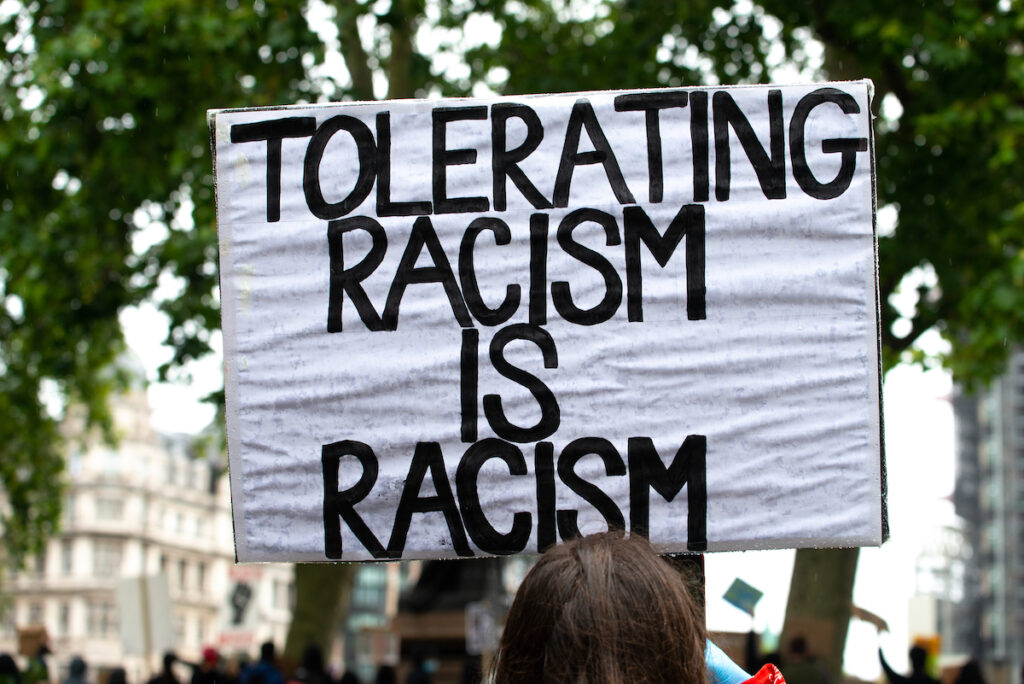
Universities must adopt trauma-informed, anti-racist support to truly nurture Black students.
Statement of interests
Hári Swell has no conflicts of interest to declare.
Edited by
Dr Dafni Katsampa.
Links
Primary papers
Nkasi Stoll, Yannick Yalipende, Jhanelle White, Heidi Lempp, Stephani Hatch (2025). “How can I thrive in an institution that hates me?”: impact of racism and other stressful life experiences on black postgraduate students’ mental health. Race Ethnicity and Education, 1–25.
Nkasi Stoll, Sunehna Kayn, Heidi Lempp, Stephani Hatch (2025). Impact of racial discrimination in education and other adverse childhood experiences on black students’ mental health and wellbeing: an interpretative phenomenological analysis study. International Journal of Qualitative Studies on Health and Well-Being, 20(1).
Other references
Bernard, C., Fairtlough, A., Fletcher, J. and Ahmet, A., 2014. A qualitative study of marginalised social work students’ views of social work education and learning. British Journal of Social Work, 44(7), pp.1934-1949.
Bernard, D. L., Calhoun, C. D., Banks, D. E., Halliday, C. A., Hughes-Halbert, C., & Danielson, C. K. (2020). Making the “C-ACE” for a culturally-informed adverse childhood experiences framework to understand the pervasive mental health impact of racism on black youth. Journal of Child & Adolescent Trauma, 14(2).
Carter, R & Pieterse, A. (2020) Measuring the Effects of Racism: Guidelines for the Assessment and Treatment of Race-Based Traumatic Stress Injury. New York. Columbia University Press
Chisadza, C., Nicholls, N. and Yitbarek, E., 2019. Race and gender biases in student evaluations of teachers. Economics Letters, 179, pp.66-71.
Gilliam, W.S., Maupin, A.N., Reyes, C.R., Accavitti, M. and Shic, F., 2016. Do early educators’ implicit biases regarding sex and race relate to behavior expectations and recommendations of preschool expulsions and suspensions. Yale University Child Study Center, 9(28), pp.1-16.
Fanon, F. (1986) Black Skin, White Masks. London: Pluto Press.
Steele, C.M. and Aronson, J., 1995. Stereotype threat and the intellectual test performance of African Americans. Journal of personality and social psychology, 69(5), p.797.
Sue, D.W., Capodilupo, C.M., Torino, G.C., Bucceri, J.M., Holder, A., Nadal, K.L. and Esquilin, M., 2007. Racial microaggressions in everyday life: implications for clinical practice. American psychologist, 62(4), p.271.