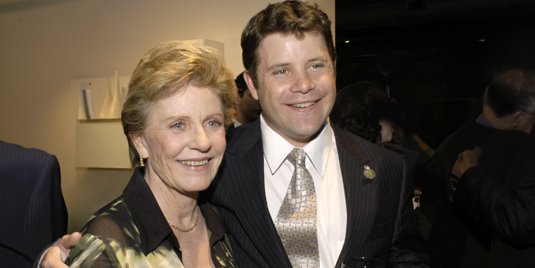

The actor reflects on life with Patty Duke and what he learned about self-care, boundaries, and compassion.
Key Takeaways
- Sean Astin’s reflections on his mother, Patty Duke, show the importance of self-care and boundaries when supporting a loved one with bipolar disorder.
- Recognize that mood episodes are symptoms of a brain-based disorder, not a reflection of your worth or actions.
- Encourage early intervention and a wellness plan that includes medical guidance and therapy.
- Hold on to hope by focusing on stability, forgiveness, and empathy.
Editor’s Update
Actor Sean Astin shared a profound and complex relationship with his mother, Patty Duke, colored by both personal challenges and deep admiration. Duke, celebrated for her acting talent, lived with bipolar disorder, a diagnosis that brought clarity to her family’s turbulent experiences. While Astin himself does not have a diagnosis, he has become a leading voice for the family perspective.
It’s hard to overstate the groundbreaking impact when Duke revealed her bipolar diagnosis in her 1987 memoir, Call Me Anna. She eventually became an activist, even lobbying Congress for more attention and funding for mental health research. Astin openly discusses how his mother’s mental health challenges shaped his upbringing and early acting roles. He praises Duke’s dedication to reducing stigma and educating the public, noting that she was a vocal advocate before such public disclosures were common.
Like his mother, Astin also became a mental health advocate, promoting understanding for those living with psychiatric conditions and self-compassion for the people who share their journey. Astin remains active in entertainment and advocacy. According to IMDb, he has appeared in nearly 200 TV shows and movies, including The Conners and the sci-fi thriller The Shift. In 2025, he was elected president of SAG-AFTRA, following in Duke’s footsteps as a leader in the entertainment industry.
Greeting the Community With Hope and Humor
Sean Astin strides onstage and bursts into the theme song from the 1960s TV sitcom, The Patty Duke Show. The crowd responds warmly with applause and appreciative laughter.
“My daughters hate when I sing — especially in public,” Astin confesses, a broad smile on his face.
This may seem like an odd way to greet the 600 guests attending a benefit for East House, a mental health agency in Rochester, New York. But the audience is in on the joke: They know Astin is the eldest son of famous actress Patty Duke, who starred as look-alike teenage cousins in the show bearing her name.
How Sean Astin Became a Mental Health Advocate Like His Mother
Duke was just 16 when her sitcom debuted in September 1963. Earlier that year, she became the youngest person to win an Academy Award. She won “Best Supporting Actress” for her performance as Helen Keller in The Miracle Worker. She was even younger when she originated the role on Broadway two years earlier.
Acting is part of the legacy both Astin and his younger brother, Mackenzie Astin, inherited from their mom. Like her, both boys started as child actors. Mackenzie’s career path took him toward television (The Facts of Life, Scandal, and The Magicians). While Sean is no stranger to TV, he’s probably best known for his work in films, notably The Goonies, Rudy, as the title character, and The Lord of the Rings trilogy as Samwise Gamgee.
Astin is also following in his mother’s footsteps as a mental health advocate, speaking out about the challenges families can face and the importance of getting help. He tries to encourage compassion for those living with psychiatric conditions — and self-compassion for those who share in their journey.
Astin considers his mother a “foot soldier” in the struggle to raise awareness and reduce stigma. “The fact she talked about it openly was really helpful,” says Astin, noting the individuals who approached him to talk about how Duke saved their lives.
Sean Astin’s Life Growing Up
In interviews and appearances, Astin talks candidly about growing up with a mother buffeted by symptoms of undiagnosed bipolar disorder. Like many with bipolar 1, Duke spent more time in depression than mania, Astin says. Incapacitating sadness could be triggered by the rhythms of life, such as travel or changes in the weather.
When Duke was diagnosed in 1982 and began working toward stability, Astin was 11. Now in his fifties, he can look back with a more knowledgeable and mature perspective. He describes his childhood as largely a happy one, “except for a few terrible episodes” — like the dark day his mom took an overdose of pills in front of Astin and his brother. As a boy, Astin saw the action as manipulative. In retrospect, he realizes it was a cry for help.
The family’s closeness was a salve for the rougher patches. “We were able to express our deepest feelings to one another,” he says. “We would offer positive words, try to listen, and understand. Our family, we are experts in forgiveness.”
Understanding the Impact of Bipolar 1 Symptoms on Family
Astin was actually raised by two celebrities: John Astin, his adoptive father, played Gomez in the original 1960s TV version of The Addams Family. His parents weren’t interested in the rich-and-famous lifestyle, however. Sean recalls carefree California days, roaming on his bicycle and bringing friends home without notice. He says his dad emphasized the importance of doing well academically, while his mom modeled and encouraged professionalism in acting endeavors.
Duke’s emotional extremes upset their usual family dynamic. Astin says that at those times, he sometimes felt like he was playing the parent, and Duke, the child. For example, when his parents fought, the actress would look to her young sons for sympathy and support.
“We felt sorry for her. It was like watching a little kid act out,” Astin recalls. There were times Duke would try to explain what she was experiencing.
“She would sit us on the couch, begging us to understand … that she had a physical hurt in her chest,” says Astin. “‘It’s indescribable,’ she would say. ‘Help me.’ That was my training in empathy.”
Protecting Personal Well-Being While Showing Compassion
Still, such mood episodes were hard on Astin. It wasn’t until he was married and established in his own home that he felt safe to begin fully processing his childhood.
“Then all the rage and resentment I never expressed started coming out,” he recalls. “When you interact with someone who is suffering, you need mind-numbing patience. You end up sublimating your own feelings until it feels safe to express them.”
Even as a boy, Astin says, he recognized he was not responsible for Duke’s angry outbursts and low moods. “I could see that the problems were hers — that I had done nothing wrong,” he explains.
Astin tells audiences he wishes he could have done more to help his mother, but he realized it was equally important to protect himself.
“You have a right to feel safe and to live your life free from pain,” he says. “Compassion for a loved one who is suffering does not mean sacrificing your own health and happiness.”
Finding Stability and Designing a Life for Wellness
To her credit, Duke not only accepted her diagnosis, “she loved the diagnosis because it gave a reason to explain her [erratic] behavior,” Astin explains in an interview on the podcast, Inside of You With Michael Rosenbaum.
Astin’s mother adhered to a wellness plan that included medication and psychotherapy and worked hard to repair relationships that were subject to bipolar disruptions — “atoning for anyone she ever hurt,” is how he puts it.
But stability is often an elusive goal. Astin recalls his occasional bemusement as a teen: “When you’re in her house and close the door, and she’d still freak out because her food order was wrong, you’d be like, ‘Where’s the maven of mental health at this moment?’”
Patty Duke’s Legacy of Love and Advocacy
With the distance of years, though, Astin mainly remembers the good times. He says that, despite Duke’s emotional volatility, she was a warm and loving mother.
“Her capacity to love was limitless,” says Astin. “She offered unending kindness, support, and generosity. No matter how dark things got, she loved us. It was an incalculable gift from God.”
It was also a gift passed to the next generation. “My three daughters now talk a lot about Nana,” he adds.
To Astin, his mother was a larger-than-life figure: intense, fascinating, able to forge strong connections, and fierce in the face of injustice. He also admires her strength and endurance in the face of bipolar: “She suffered like Job, but she also lived. She spoke, wrote, acted, and traveled.”
By 1980, Duke had three Emmy Awards and two Golden Globe Awards to go with her Oscar. In 1985, she became the second woman elected president of the Screen Actors Guild, a post she held until 1988. She also advocated for gay rights and civil rights.
As Duke entered her fifties, she embraced a quieter life, moving to a farmhouse in Idaho with her fourth and longtime husband, Michael Pearce, whom she married in 1986. “She designed a life that reinforced her wellness,” Astin says.
Patty Duke died in 2016, at age 69, from sepsis. Mother and son remained close to the end. “I loved her,” says Astin simply. “I never stopped loving her.”
What Families Can Learn From Sean Astin and Patty Duke
Astin’s reflections offer a compassionate but honest reminder for families affected by bipolar disorder: Love matters deeply, but boundaries matter, too. Supporting someone through mood episodes does not mean ignoring your own fear, pain, or need for safety.
His story also points to the power of reducing stigma. Duke’s willingness to speak publicly about bipolar disorder helped others feel less alone, while Astin’s perspective shows how openness, accountability, treatment, and forgiveness can shape a family’s healing over time.
UPDATED: Printed as “My Story: My mom, Patty Duke,” Winter 2020