

Your gut bacteria don’t just help you digest food. They also make chemicals that your brain depends on. One of the most powerful is butyrate, a short-chain fatty acid (SCFA) produced when certain gut microbes ferment dietary fiber. Butyrate feeds the cells lining your colon, helps maintain your gut barrier, and sends chemical signals that researchers have associated with how the brain handles stress, hunger, memory, and inflammation.
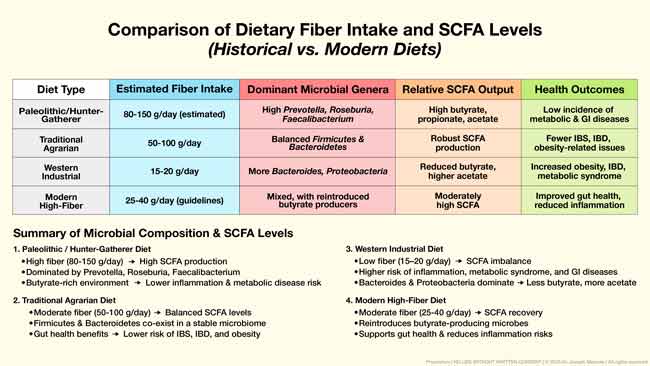
Modern diets have sharply reduced this internal chemical communication. In the U.S., average fiber intake hovers around 15 to 20 grams a day — well below intakes recorded in some traditional cultures. For example, hunter-gatherer groups such as the Hadza in Tanzania eat an estimated 80 to 150 grams of fiber per day.
Researchers report meaningful differences in microbiome composition and SCFA output between these populations and Western populations, though intakes of this magnitude are not appropriate for most modern adults with compromised gut health and are not an advisable starting goal.
When butyrate drops, your body can pay a steep price. Research has linked low SCFA output to inflammation, cognitive complaints, mood symptoms, and metabolic disturbances. The intestinal lining weakens, allowing bacterial toxins to leak into the bloodstream. This “leaky gut” state has been linked to chronic inflammation, insulin resistance, and mood disturbances.
Over time, research suggests it may play a role in conditions as varied as Type 2 diabetes, Parkinson’s, and ulcerative colitis — though disease mechanisms differ. Overall, compromised gut integrity and low butyrate output are recurring themes across this body of research.
My paper, “SCFAs Modulate Gut-Brain Axis Function,” explores the roles that SCFAs — especially butyrate — appear to play in both gut and brain health.
It focuses on how SCFAs serve as messengers between the digestive tract and the brain, and how modern diets — low in fiber and high in polyunsaturated fats like linoleic acid (LA) — appear to have disrupted this ancient symbiosis, contributing to chronic inflammation and neurological issues. You can download a simplified, layman-friendly version of it by clicking the link below.
Your Gut Makes Brain-Supporting Chemicals — But Only if You Feed It Right

The table above shows which types of gut bacteria make key SCFAs, what foods they feed on, such as resistant starch and inulin, and how they can help keep the gut healthy and balanced.
• SCFAs are studied across multiple conditions — My paper draws on a wide base of experimental and clinical data to illustrate the effects of SCFAs in different disease states. These include ulcerative colitis, obesity, depression, multiple sclerosis, and Parkinson’s disease. The research suggests that if you’re dealing with gut problems, brain fog, or metabolic stress, low SCFA output (including butyrate) may be one factor affecting how you feel.
The table below summarizes clinical studies in which SCFAs or prebiotic fibers were used in gut and metabolic conditions. It shows the populations that were studied, what they received, and what the results were.

• Butyrate directly supports the cells that line your colon — Colonocytes, the cells that form the protective lining of the colon, run primarily on butyrate as a main fuel source. They use it to produce adenosine triphosphate (ATP) through mitochondrial beta-oxidation. When butyrate is in short supply, these cells tend to weaken; the intestinal wall can then become more permeable, allowing endotoxins like lipopolysaccharides (LPS) to pass into the bloodstream with greater ease.
• SCFAs and systemic inflammation — Butyrate appears to do more than serve as colonic fuel. Preclinical research suggests it may influence immune signaling by supporting regulatory T-cell activity and dampening inflammatory macrophage activity.
This matters because gut-origin inflammation has been associated with mood disturbances, cognitive symptoms, and neurodegenerative processes in observational and animal research. My paper discusses how supporting butyrate production may help interrupt this inflammatory cycle.
• SCFAs influence hormones that control appetite and weight — SCFAs trigger the release of hormones like glucagon-like peptide-1 (GLP-1) and peptide YY in your gut. These hormones signal satiety and help regulate blood sugar. Research also suggests they may support insulin sensitivity and influence obesity-related inflammation.
Pharmaceutical GLP-1 agonists, such as Ozempic, act on the same receptor pathway, and a balanced gut microbiome appears to support the body’s endogenous GLP-1 signaling.

• How gut bacteria make SCFAs — Gut bacteria feed on dietary fiber through specific fermentation pathways to produce SCFAs. These are then used by colon cells, blood vessels, and tissues throughout the body. These bacteria thrive in low-oxygen environments and appear to be central to gut and systemic function. The figure above illustrates these fermentation pathways and how SCFAs travel from the gut to other tissues.

• The effects of SCFAs start quickly but depend on your diet — Most of the SCFAs produced in the gut are used locally in the colon, but a small amount — roughly 5% to 10% — reaches the bloodstream and may cross into the brain. If fermentable fiber is in short supply, or if the gut microbiome is imbalanced, SCFA production drops sharply. Research suggests this can occur within days of switching to a highly processed Western-style diet.
The figure above uses pie charts to compare gut bacteria and SCFA levels under a traditional high-fiber diet versus a typical low-fiber Western diet, and the implications for gut health and metabolism.
How Supporting SCFA Production May Help Your Gut and Brain Health
As discussed in my paper, individuals with greater baselines of gut dysbiosis or inflammation have often shown the largest relative improvements when SCFA levels were supported, either through dietary fiber, butyrate enemas, or fecal microbiota transplants (FMT). For example, one small study involving ulcerative colitis patients reported symptom improvements after several weeks of butyrate enema.1
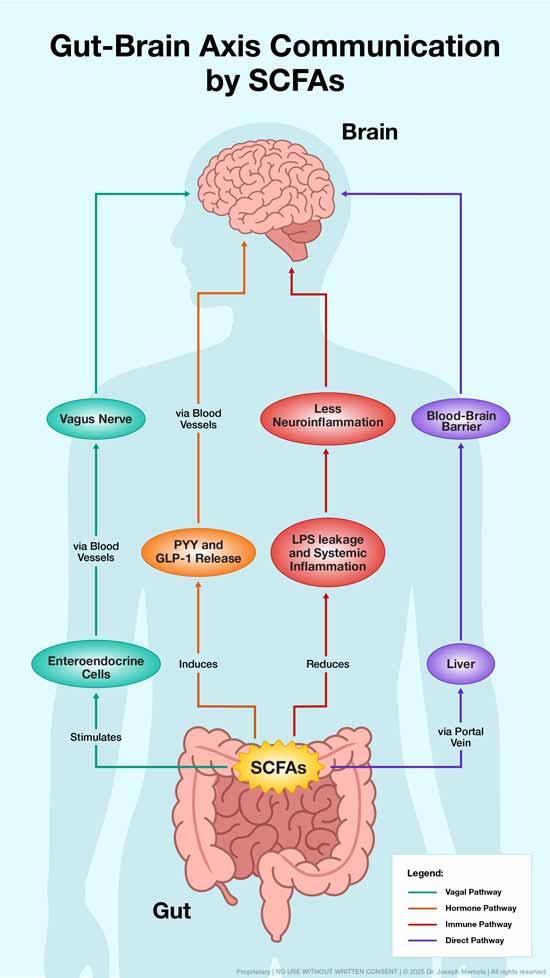
The figure above shows the proposed pathways through which SCFAs may communicate between gut and brain — via the vagus nerve, hormonal signaling, immune signaling, and direct metabolite action.
• Acetate, propionate, and butyrate each play different roles — Each of these SCFAs appear to play different roles. Acetate is studied for brain signaling and fat metabolism. Propionate has been linked to satiety and blood sugar regulation. Butyrate is the primary energy source for colonocytes and is studied for gut barrier integrity, anti-inflammatory signaling, and epigenetic effects.
• Butyrate and brain gene expression — Butyrate has been shown to inhibit histone deacetylase (HDAC) enzymes in laboratory studies, an epigenetic effect researchers have associated with changes in brain-derived neurotrophic factor (BDNF) expression — a protein involved in learning, memory, and mood regulation. Early-stage research is exploring whether this mechanism may be relevant in conditions such as Alzheimer’s, depression, and autism spectrum disorders.
• The HPA axis and stress — SCFAs are also studied for their role in the hypothalamic-pituitary-adrenal (HPA) axis, the system that governs the body’s stress response. In preclinical and observational research, butyrate has been associated with reduced HPA-axis reactivity, which researchers have proposed may help explain why higher SCFA levels appear to track with lower self-reported anxiety and greater emotional stability under stress.

• Gut bacteria are the only reliable source, and they need fiber — Humans don’t produce meaningful amounts of butyrate on their own. The colonic microbiome makes it from fermentable fiber. Without that substrate, the microbial community can shift in less favorable directions and SCFA output drops.
If fiber intake is too low — or if the gut is not yet ready to tolerate fiber — the brain-supporting and anti-inflammatory effects associated with SCFAs become harder to access. The figure above shows the cycle associated with low-fiber Western diets — fewer SCFAs, microbiome shift, weakened mucus layer, and increased inflammation.
• Approaches researchers have studied to support SCFA production — My paper details a range of approaches researchers have studied to support SCFA production:
◦ Adding resistant starch and inulin-rich foods like green bananas, cooked-and-cooled potatoes, garlic, and onions — once the gut can tolerate them.
◦ Researchers have also studied encapsulated butyrate supplements, which are designed to deliver butyrate to the colon. Note that these are still being studied and may not substitute for restoring microbial production through a nutritious diet.
◦ FMT is the basis of a therapy approved by the U.S. Food and Drug Administration (FDA) for recurrent C. difficile infection. Early research is exploring its potential for other conditions, including Parkinson’s, though results in this area remain preliminary.
The table below outlines the main challenges people face when trying to support SCFA levels — such as fiber tolerance or targeting SCFAs to the right part of the gut — and the options researchers have explored, including prebiotics and protective delivery systems.

Note: These findings come from a mix of clinical research and preclinical (laboratory and animal) studies. Results may not apply to all individuals, and mechanisms observed in laboratory or animal research may not directly translate to human health.
Rebuild Your Gut’s Capacity to Produce Butyrate
If your gut isn’t producing enough butyrate, then you might be short in one of the most important inputs supporting the gut-brain axis. The root issue is almost always the same: the gut bacteria don’t have what they need. That means the first step isn’t chasing supplements. It’s rebuilding the environment those bacteria need, and that starts with diet.
Whether you’re dealing with brain fog, blood sugar concerns, inflammatory issues, or mood symptoms, the gut’s butyrate output is part of the picture. Restoring it is straightforward when approached gradually:
1. Assess your gut health before making any changes — Before you change your diet, take inventory. Ask yourself these key questions:
• Do you have a long list of food intolerances?
• Do you bloat or experience pain after eating fiber-rich foods?
• Do you go a day or more without a bowel movement?
• Do you suffer from chronic diarrhea or loose stools?
If you answered yes to one or more of these, your gut is likely in a compromised state. Now that you know what you’re working with, the steps below outline a careful approach to supporting recovery.
2. Avoid fiber and complex carbs until your gut calms down — When your gut is out of balance, high-fiber foods — even the “healthy” ones — can work against it. Foods like beans, lentils, oats, and raw greens ferment quickly when the wrong bacteria are dominant, producing gas, pressure, and inflammation that can worsen gut-lining damage.
Early on, choose easy-to-digest foods like whole fruit and white rice. These provide steady fuel without feeding bacterial overgrowth. As symptoms ease, complex foods can be reintroduced carefully. Keep in mind that rushing this step tends to set people back.
3. Start slowly reintroducing fermentable fibers into your diet — If you’re coming from a low-fiber or low-carb background, avoid overloading your system. Start with small amounts of cooked and cooled white potatoes or green bananas — both rich in resistant starch.
If you tolerate those, gradually add foods like garlic, onions, and leeks, which feed butyrate-producing bacteria. These fibers bypass digestion in the small intestine and reach the colon, where they fuel SCFA-producing bacteria.
Remember, you’re not just feeding your gut — you’re re-seeding it. Specific strains like Faecalibacterium prausnitzii have been studied as high butyrate producers, and citrus fruits are one accessible substrate. Fermented foods such as raw sauerkraut or kefir may also support microbial diversity — provided they are well-tolerated.
The figure above compares fiber intake in past versus modern diets, the gut bacteria most observed, SCFA output, and associated health markers. It illustrates how diets higher in fiber — like those documented in Paleolithic or traditional farming cultures — have been associated with different gut profiles than modern low-fiber diets.
4. Avoid vegetable oils and other high-LA foods — LA appears to disrupt the gut microbes you’re working to support, especially if your diet includes fried foods, processed snacks, or sauces made with soybean, corn, sunflower, or canola oil. Cooking fats like ghee, grass fed butter, or tallow are more stable choices. The goal is to shift your internal terrain so that beneficial gut bacteria have room to grow.
5. Repair the terrain with daily habits that support microbial balance — Your gut isn’t just affected by food. Sleep, sunlight, and stress all shape your microbial ecosystem. Morning sun exposure helps regulate the circadian rhythm and may support gut barrier function.
Stop eating at least three hours before bed to give your gut time to clean up and reset. And if you’re dealing with high stress, use breathwork, walking, and other relaxation techniques to calm your nervous system, because chronic stress has been shown to reduce SCFA production at the microbial level.
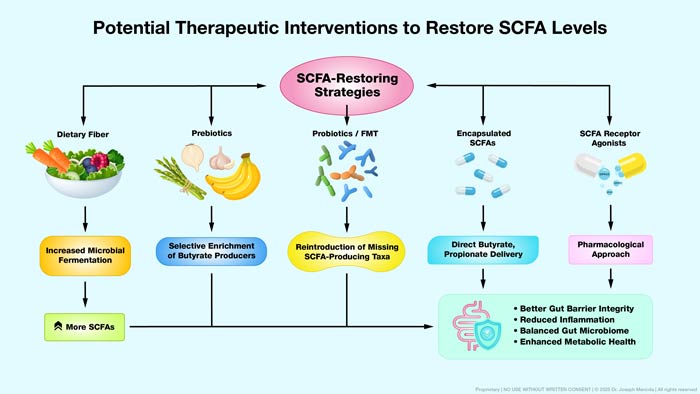
The figure below summarizes the main approaches researchers have studied for supporting SCFA levels — fiber-rich foods, prebiotics, probiotics, butyrate capsules, and fecal microbiota transplants — and how each appears to interact with gut, brain, and overall health.
You can begin improving your gut health right now. My book, Gut Cure: Stop the Rot: Restore Your Body from the Inside Out, lays out the science and the full step-by-step protocol. Order Gut Cure: Stop the Rot: Restore Your Body from the Inside Out now.


FAQs About SCFAs
Q: What is butyrate and why is it important for your health?
A: Butyrate is an SCFA produced when specific gut bacteria ferment fiber. It’s a primary fuel source for the cells lining the colon and is studied for its roles in gut integrity, inflammation, brain function, and metabolic signaling. Research has associated low butyrate levels with mood symptoms, insulin resistance, and conditions including ulcerative colitis and Parkinson’s. However, note that these are associations rather than established causal links.
Q: How does a low-fiber diet affect your brain and body?
A: Western diets typically provide around 15 to 20 grams of fiber per day, well below the 50 to 100 grams documented in some traditional cultures. Research has associated this gap with weaker intestinal barrier function, more endotoxin exposure, and increased systemic inflammation — patterns that can manifest gut symptoms, cognitive complaints, and weight changes.
Q: What are the signs that you’re low in SCFAs like butyrate?
A: If you experience digestive problems, low energy, anxiety, poor stress tolerance, or stubborn weight changes, low SCFA output may be one factor. These symptoms often overlap with conditions like metabolic syndrome, inflammatory bowel disease, and neurodegenerative conditions. Lower SCFA levels have been associated with weaker gut barrier function, more inflammation, and altered brain signaling.
Q: How do you increase butyrate production naturally?
A: To support butyrate, you need to feed the gut bacteria that make it. Start by giving your gut a chance to heal — focus on easy-to-digest carbs like whole fruit and white rice. Then, gradually add fermentable fibers like resistant starch (found in cooked-and-cooled potatoes and green bananas) and inulin-rich vegetables (like garlic and onions). Cutting out vegetable oils and processed foods is also important, since these appear to disrupt the gut’s microbial balance.
Q: Does restoring butyrate help with mood and stress resilience?
A: Research suggests it may help. Butyrate appears to modulate the HPA axis — the system that governs the body’s stress response — and has been associated with changes in BDNF expression in animal and laboratory studies. Higher SCFA levels have been linked to lower self-reported anxiety and greater emotional stability. Researchers are also studying this connection in conditions like depression, post-traumatic stress disorder, and autism spectrum disorders.
This article is for informational purposes only and does not constitute medical advice. Consult a qualified health care provider before making changes to your health regimen.
Test Your Knowledge with Today’s Quiz!
Take today’s quiz to see how much you’ve learned from yesterday’s Mercola.com article.
What does magnesium help regulate?