
It is the final day of the AACR Annual Meeting 2026. But even though it is a half day, it is still full of science. Our coverage will include the Plenary Session on innovative treatment modalities, the Advances in Technologies session on agentic artificial intelligence (AI) as the oncologist, the Closing Plenary examining highlights from the meeting, and more.
If you missed our previous days’ live coverage of the meeting, catch up here:
Today’s Coverage
(All times are Pacific Time.)
6:05 a.m. – Global Scholar-in-Training Awardees Meet With AACR Leadership
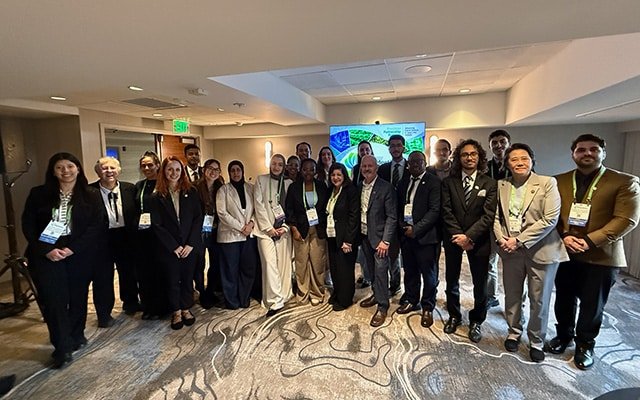
In one of our previous live updates, we shared information about this year’s Global Scholar-in-Training Award (GSITA) recipients. Last night, these GSITA recipients got to meet with AACR President Keith T. Flaherty, MD, FAACR, along with AACR Immediate Past President Lillian L. Siu, MD, FAACR, former AACR President Patricia M. LoRusso, DO, PhD (hc), FAACR, and AACR CEO Margaret Foti, PhD, MD (hc).
“As a GSITA, it was a privilege to meet AACR leadership and share not only our discoveries, but also the setbacks that shape our work,” said Abdel-ilah Aziz, MSc, of UM6P Hospitals, Mohammed VI Polytechnic University in Morocco. “That these experiences were met with such thoughtful attention made the dialogue especially meaningful. Our conversations on building programs to support research in our home countries felt both urgent and hopeful, an inspiring reminder that even our challenges can help spark pathways for lasting change.”
Saravanan Sampoornam Pape, MDS, of KIIT University in India, said, “What struck me most was how approachable everyone was about the future. I shared that expanding AACR’s regional training initiatives and creating more bidirectional exchange programs could help accelerate careers and build capacity in our region. I left even more motivated to contribute to AACR’s mission.”
“The event created a space where early-career researchers felt genuinely heard, and it was incredibly encouraging to see our ideas, perspectives, and concerns being welcomed and valued,” added María Mercedes Debernardi, PhD, of BIOMED-UCA-CONICET in Argentina. “Knowing that leaders at the forefront of cancer research are not only guiding the field but also actively listening to the next generation makes this experience especially meaningful. It reinforces a sense of belonging within the scientific community and motivates us to continue contributing with passion and purpose.”
9:10 a.m. – Annual Grantee Recognition and Poster Reception
Each year, AACR grant recipients are invited to participate in a poster reception at the AACR Annual Meeting. This year, about 40 grantees attended last night’s reception to share posters providing updates about their work. The event also included remarks from AACR Chief Executive Officer Margaret Foti, PhD, MD (hc), who said AACR has provided $551 million in grant funding since awarding its first grant back in 1993. Christine A. Iacobuzio-Donahue, MD, PhD, of Memorial Sloan Kettering Cancer Center, and cancer survivor Sid Sijbrandij also addressed the crowd of grantees to offer words of encouragement.

Iacobuzio-Donahue said that she got her first AACR grant in 2003 and even though the research it funded didn’t pan out the way she had hoped, the grant still left a lasting impact.
“What was so impactful to me was that getting that award made me feel seen and made me feel like my potential was seen,” Iacobuzio-Donahue explained. She told the grantees in attendance that she hopes they now feel seen because they represent the future of cancer research.
Towards the end of the reception, Yixian (John) Zhang, PhD, vice president of Research and Grants Administration at AACR, announced the two winners of the poster competition, and indicated the judges had a very tough task this year. But ultimately, the winners were:
- Adham Halaoui, MD, of University of California, San Diego, whose poster was titled, “SMARCB1-mediated chromatin remodeling underlies sex differences in gliomagenesis”; and
- Timothy Spear, MD, PhD, of Children’s Hospital of Philadelphia, whose poster was titled, “Epitope-encoded mRNA-LNP vaccine to enhance anti-tumor potency and persistence of PHOX2B peptide-centric CAR T cells.”

9:50 a.m. – Scenes from the Exhibit Hall
The Exhibit Hall closes at noon, so this is your last chance to stop by. To get an idea of what you may have missed or may want to check out, here are some highlights from throughout the meeting.


2:45 p.m. – A Disturbance in the Force
Fibrosis that occurs in response to tumor development leads to stiffening of the tumor stroma, leading to tension exerted onto cancer cells that promotes various tumorigenic processes and suppresses antitumor immunity, according to presenters of this morning’s Major Symposium on “Understanding the Impact of Mechanobiology on Tumor Evolution.”

Session Chair Valerie M. Weaver, PhD, of University of California, San Francisco, discussed how fibrosis-mediated tissue and cell tension leads to genomic instability and inflammation-dependent mutations implicated in breast cancer risk and progression. She shared new data suggesting that carriers of germline BRCA mutations, as well as women with high breast density, have stiffer breast tissue that induces molecular changes that increase the woman’s risk of breast cancer.
Emphasizing the influence of tissue tension in cancer biology, Weaver argued that “not considering force in cancer is like trying to cure cancer half blind.”
Dennis E. Discher, PhD, of the University of Pennsylvania, shared that “confining microenvironments” induce copy number variations with pancancer implications, and Christina Curtis, PhD, MSc, FAACR, of Stanford University, examined the spatial and mechanical niches that arise as breast cancers evolve under mechanical pressure.
2:25 P.M. – Dr. Robot? AI Agents in the Clinic
AI chatbots may have taken the world by storm, but the technology has continued to develop. Now, AI doesn’t just talk—it does.
AI agents are virtual programs that can execute tasks when asked to do so by a human. As covered in the third Plenary Session of this year’s Annual Meeting, AI agents can write code, review the literature, plan experiments, and even function as “co-scientists.”
But in addition to aiding cancer research, AI agents also have the potential to revolutionize the oncology clinic. At the Advances in Technology Session, “Agentic AI as the Oncologist: Clinical Decision Support and Human-AI Collaboration,” presenters reviewed use cases for AI as a smart companion for clinicians.
Dorin Comaniciu, PhD, of Siemens Healthineers, began with a discussion of how AI can enhance oncology imaging and bring its actionable data to an enterprise level. From his perspective, the agentic capabilities of AI offer a new quality of usefulness.
“At 10 seconds per image, you’d need 150 years” to view all 500 million medical images on which the Siemens AI imaging analysis tools were originally trained—a demonstration, said Cormaniciu, of AI’s capacity to extract useful patient data and form the basis for clinical decision-making.
The system Cormaniciu presented was a series of specialized AI agents designed to perform analyses of imaging data from multiple sources across the patient treatment cycle, with continuous feedback provided to yet another AI agent that would synthesize the data into prospective treatment planning.
The promise of such a pipeline, Cormaniciu said, is a new level of efficiency for oncologists throughout the health care system, who can work alongside the AI to assess which next steps would be best to take.
Tae Hyun Hwang, PhD, of Vanderbilt University, spoke about AI as what he called “the 4D oncologist.” Though histopathology is 2D and biology is 3D, he said, a tumor’s response to treatment over time is fundamentally 4D, with every data point within the tumor evolving as treatment goes on. AI agents, said Hwang, enable the unification of all these data into real-time assessment of tumor response in clinical settings.

“Have you ever wondered how a drug works in the human body? You might know the mechanisms, but we’ve never watched that,” he said. “Today, we’ll watch together.”
Hwang demonstrated his lab’s technology: a multi-AI-agent-augmented live imaging system for gauging drug dynamics and effects within an individual patient’s tumor. Rather than a single model, several AI agents work together to analyze different aspects of tumor biology, drug dynamics, metastatic potential, and downstream treatment responses.
Thanks to this agentic collaboration, the Hwang lab’s system can test multiple drugs “to pick the winner before treatment,” he said. But ultimately, according to Hwang, all this context informs the human decision of how to proceed with treatment—making that decision the best that it can be.
Session Chair Renato Umeton, PhD, of St. Jude Children’s Research Hospital, closed with a discussion from an institutional point of view. He described St. Jude’s all-systems-go approach to AI, which aims to empower both researchers and clinicians to build the tools they need to speed up their work and achieve new efficiencies for quality patient care.
“What I want to show you today is a story of acceleration,” he said. “There is a deafening level of hype around AI. Ask [researchers working with AI] the point question: what’s the time to patient?”
One of the most meaningful, if not the most meaningful, affordances of AI is its ability to speed up progress, Umeton said—but that can only occur in a context designed to integrate continuous AI experimentation and improvement. St. Jude’s Data Science Initiative, he said, provides an administrative model for managing, testing, and, ultimately, implementing AI throughout active clinics while incorporating updates from the research side of healthcare as they develop.
Umeton described how St. Jude is simultaneously allowing employees to pilot Claude Research, Claude Code, BioMCP, Biomni (one of the tools showcased in the third Plenary Session), K-Dense, and other AI applications. Every level of employee, he said, is now trained on the basics of AI so that they can upskill themselves and use AI confidently to create new tools and protocols. St. Jude also encourages internal collaboration on AI use to discuss roadblocks and solutions as well as emerging best practices.
Few hospitals, he said, have access to the kind of computational resources needed to train competitive AI tools and systems. But with partnerships, organizations can access pooled resources, enabling clinicians and researchers to pursue ambitious AI projects.
Umeton was optimistic about the efficiencies that new AI initiatives can bring to healthcare around the world, and he said he looked forward to seeing how inter-institutional collaboration on AI deployment in healthcare may lead to tailored guidance on AI systems at the level of the individual organization.
3:15 p.m. – Looking at Africa to Achieve Precision Medicine for All
While about 17% of the world’s population is African, only about 2% of available genomic data in cancer research is African. During the session “Precision for All: Harnessing Multiomic Technologies to Eliminate Cancer Inequalities,” each of the presenters not only explained why that needs to change, but how incorporating more African data can be a benefit for all.
Yaw Bediako, PhD, of Yemaachi Biotech, explained how Africa is home to the world’s most genetically diverse population. In fact, there is a colloquial saying there about how Africans are more different from each other than they are from people outside of Africa. Bediako pointed to studies that show toxicity and efficacy of common chemotherapies differ between Black Africans and other ethnicities; novel risk loci identified in Black South African breast cancer patients that were not found in those with West African ancestry; and how tumor-normal sequencing revealed a novel TP53 germline variant in patients with breast cancer in Nigeria.
“The point I’m trying to make is, including African genomic data in cancer research is not a matter of inclusion or diversity … it is good science,” Bediako said. This information will greatly aid in identifying novel mutations for risk prediction, clinically actionable variants, and better annotation of variants of uncertain significance, he explained.
Ireshyn Govender, PhD, of the Council for Scientific and Industrial Research in South Africa, has focused his work on examining insights from proteomics data where he said there are even fewer Africans represented in the available global datasets. But proteomics can capture posttranslational modifications that cannot be gleaned from genomics and may help identify other biomarkers and novel targets unique to Africans, he explained.

Govender reviewed proteomics data on four cancer types known to have higher mortality rates in Africans to identify ways to detect these cancers earlier. For example, different groups of researchers found markers unique to Africans for breast cancer (CD36 expression); pancreatic cancer (LRG1); prostate cancer (five multiprocess driver proteins); and gallbladder cancer (nine commonly dysregulated proteins).
“Everyone emanated out of Africa, so ideally, if we can understand most of the biology on the African continent, it more readily can be extrapolated to the rest of the world,” Govender said.
Nyasha Chambwe, PhD, of the Feinstein Institutes for Medical Research, concluded the session by focusing specifically on uterine cancer. She explained how the mortality rate for this cancer has been increasing in people of African ancestry two- to threefold times faster compared to other races/ethnicities. As part of the Polyethnic-1000 Project, Chambwe and her colleagues are examining genomics data from New York City’s large and diverse population to unlock insights about a number of cancer types.
In uterine cancer, they observed that CD8 T-cell infiltration decreases as African ancestry increases in individuals of multiple ethnicities, which could suggest ancestry-related differences in the immune microenvironment. Additionally, the gene MECOM was found to be enriched in patients of African ancestry and may be associated with poor outcomes. Chambwe also indicated there are fewer currently defined actionable mutations in patients of African ancestry.
Chambwe said she hoped these data make it clear how ancestry can shape the molecular landscape of cancer, and the importance of including more diverse data to achieve the goal of precision medicine for all.
3:55 p.m. – Fifth Plenary Session of 2026 Spotlighted Cutting-edge Treatment Modalities That Are Transforming the Cancer Therapy Landscape
Opening the last day of the AACR Annual Meeting 2026, the Plenary Session titled “Innovative Treatment Modalities: Shaping the Future of Oncology” represented precision medicine through the lens of different therapeutic modalities, including radiopharmaceuticals, next-generation biologics, and cellular immunotherapy.
“Precision medicine in no longer about matching a drug with a target, it’s about selecting the right therapeutic platform for the biology in front of us,” said Session Chair Katayoun Rezvani, MD, PhD, of The University of Texas MD Anderson Cancer Center, emphasizing that this session brings together distinct approaches not as separate advances but as complementary strategies that can collectively broaden how we approach cancer treatment and further expand the reach of precision medicine.
The first presenter was Martin G. Pomper, MD, PhD, of University of Texas Southwestern Medical Center, who opened the session with renewed momentum in molecular radiotherapeutics and theranostics. Theranostics combines next-generation imaging approaches with radioligand therapy to detect very small lesions that can then be targeted for radiochemical debulking. An advantage of theranostics is that it is very safe and less toxic than chemotherapy, so it can represent a valid option for some patients, said Pomper.
Leading from his research focused on PSMA-targeted strategies, Pomper pointed out that there are now many radiotheranostics currently in clinical development for prostate cancer. Pomper outlined the future directions for the field, including integration of artificial intelligence, rational combination therapies with an immunological component, high-throughput approaches for radiopharmaceutical synthesis and testing using spheroids and organoids as models, designing a wider variety of affinity agents, and more.
Raffaele Colombo, PhD, of Zymeworks Inc., traced the evolution of antibody-drug conjugates (ADCs) from early concepts to the latest approaches. He emphasized how in the early days, ADCs were regarded as magic bullets that only hit the tumor, but we now know that tumor tissues uptake less than 1% of the dose while the vast majority ends up being adsorbed by normal tissues. To enhance tumor penetration, Colombo noted, scientists are focusing on identifying and pursuing new targets; advancing new drug-like payloads optimized for ADC delivery; finding biomarkers for patient selection; and developing novel tumor-specific linkers. Gaining a deeper understanding of ADC pharmacokinetics and pharmacodynamics will also be important. He added that next-generation ADCs will be multidimensional because they will include multiple targets, multiple payloads, and utilize multiple biomarkers.
Angela Coxon, DPhil, of Amgen, reviewed the history and evolution of T-cell engagers (TCEs). Most of the TCEs approved so far are for hematologic malignancies. Coxon discussed the challenges associated with using TCEs for treating solid tumors and some strategies to overcome these obstacles by addressing target selection, antigen diversity, immune suppression, and tissue penetration.
Coxon reviewed some of the optimization strategies used in the development of new TCEs, relying on protein engineering to extend TCE half-life for solid tumors, increase avidity for improved tumor binding when targets are also present on normal cells, and improve tumor selectivity through dual targeting. “We think these engineering innovations are going to allow us to expand other molecules into new indications and patient populations,” concluded Coxon.
The last presenter of this session was John B.A.G. Haanen, MD, PhD, of Netherlands Cancer Institute in the Netherlands, who discussed tumor-infiltrating lymphocyte (TIL) therapy for solid tumors.
In a phase III randomized controlled trial, Haanen and collaborators assessed the value of TIL therapy for treatment of metastatic melanoma by comparing it head-to-head with a standard-of-care checkpoint inhibitor. The study showed that TIL therapy induced longer progression-free survival and higher best overall response rate. Furthermore, TIL therapy in real-world anti-PD-1 refractory patients showed similar outcomes to those observed in clinical trial patients. Based on these findings, Haanen advocated for TIL therapy to become standard of care for patients with metastatic melanoma.
In the last part of his presentation, Haanen showed how T-cell features within the tumor digest used to manufacture the TIL can be predictive of clinical outcome and suggested that this knowledge should be utilized to improve next-generation TIL therapies.
4 p.m. – Undergraduate Researchers on Their First AACR Annual Meeting
The AACR Annual Meeting is a longstanding tradition for cancer researchers, many of whom make a point to go every year. But there’s a first time for everything, and we caught up with two young scientists who shared their thoughts on what it was like to come to their first (but not their last!) AACR Annual Meeting.
4:30 p.m. – Final Session Emphasized Precision, Partnership, Purpose … and Passion and Progress, Too
The AACR Annual Meeting 2026 came to a close with a Plenary Session highlighting the conference’s key takeaways across the continuum of cancer research. The session was chaired by Annual Meeting Program Chairs Paul S. Mischel, MD, FAACR, of Stanford University, and Alice T. Shaw, MD, PhD, FAACR, of Dana-Farber Cancer Institute.
As major themes in basic and translational research, Katerina A. Politi, PhD, of Yale Cancer Center, identified advances in artificial intelligence (AI) tools, insights into drug resistance and immune evasion, broader understanding of the cancer genome, and technological leaps that enable better understanding of the neural-immune axis.
She also pointed to examples where fundamental insights are opening up new possibilities for cancer treatment. Expanded understanding of RAS biology has allowed new preclinical efforts aimed at overcoming resistance to KRAS inhibitors, for example. Proximity-inducing therapies are moving beyond degradation, and antibody-drug conjugates (ADCs) that employ diverse payloads, including immune-stimulating ones, are being developed—highlighting how discoveries in cells are moving cancer research into new and ever-evolving areas.
But, “cancer doesn’t just happen in cells. It happens in people, and people live in environments,” noted Mischel as he introduced Christopher Li, MD, PhD, of Fred Hutchison Cancer Center, to discuss prevention, early detection, population sciences, and disparities research.

Li shared several strategies presented at the meeting that showed promise for cancer prevention and detection. These included reducing consumption of ultraprocessed foods; using aspirin or surgery to prevent cancer in high-risk populations; advances in precision screening; and policy solutions such as insurance coverage for new early detection tests and efforts to combat e-cigarette use. He also highlighted the potential of AI and vaccines to enable cancer detection and interception, respectively.
To address the longstanding issue of cancer disparities, Li noted studies that demonstrated the positive impact of Medicaid expansion, geospatial tools that identify geographic hotspots of cancer, and self-sampling for HPV detection. Finally, he emphasized the importance of community outreach and engagement and pointed to an AI tool presented at the meeting that uses storytelling to communicate complex medical information in culturally tailored ways.
“Many lines of research are advancing toward trials that we hope will describe near-term clinical and public health impact,” he said.
Finally, Annual Meeting Clinical Trials Program Cochair Ecaterina Dumbrava, MD, of The University of Texas MD Anderson Cancer Center, presented the key takeaways from the more than 265 clinical trials abstracts presented at the meeting.
“The ‘wow’ award for this meeting goes to KRAS,” she said, pointing to promising efficacy for the investigational KRAS inhibitors zoldonrasib (which was tested in patients with lung cancer), daraxonrasib (tested in patients with pancreatic cancer), and elisrasib (tested in colorectal and lung cancers).
New targets, such as WEE1, and new ADC approaches, such as targeting CLDN6 in ovarian cancer, showed promise. Cell-based immunotherapies were effective for blood cancer interception, and researchers made progress in using these to treat solid tumors as well.
The meeting, Dumbrava said, also showcased the potential of perioperative approaches to enable surgical de-escalation, prime the immune system, and reprogram the tumor microenvironment.
In addition to summarizing emerging scientific themes, speakers also reflected on their Annual Meeting experience. As a survivor of early-stage breast cancer, Politi shared gratitude for the precision, partnership, and purpose in cancer research that is enabling her to live her best life today. “Another ‘P’ I’d like to add when I think about all of you is passion,” she said. “You all brought passion to the Annual Meeting, and I’d like to thank you all for that.”
AACR Immediate Past President Lillian L. Siu, MD, FAACR, closed the meeting with words of awe.
“Wow. I don’t know about you, but I am charged!” she said. “To follow on Dr. Politi’s adding to the tagline—precision, partnership, purpose, passion—I would say we made progress. We made progress because of the collective efforts, wisdom, innovation, and hard work of our entire scientific community.”
4:35 p.m. – That’s a Wrap—See You Next Year!