
On May 19 the ImproveCareNow community celebrates World IBD Day as a dedicated time for #TalkingAboutIBD to raise awareness for invisible illnesses like Crohn’s disease and ulcerative colitis, break down isolation, and advocate for improvements in care and outcomes. Empowering those in our community who speak up, ask questions, and share their powerful personal narratives and lived experiences helps us all move toward a fuller understanding of how IBD shows up and affects the lives of people living with it. Today we would like to highlight how deeply this collaborative sharing drives our research, by highlighting a selection of our recent ICN Research Explained blog posts, which have been coproduced by parents and researchers. By making clinical research accessible to all, we reinforce the vital connection between community insights and medical advancements. Ultimately, World IBD Day is an active invitation for patients, families, clinicians, and researchers to work side-by-side to co-design the best standard of care and improve outcomes for kids with IBD.
These highlights provide a glimpse into the research, if you find a study that interests you, be sure to click on “Get #InTheLOOP” to read the full summary and insights.
What does this mean for patients, families, and clinicians?
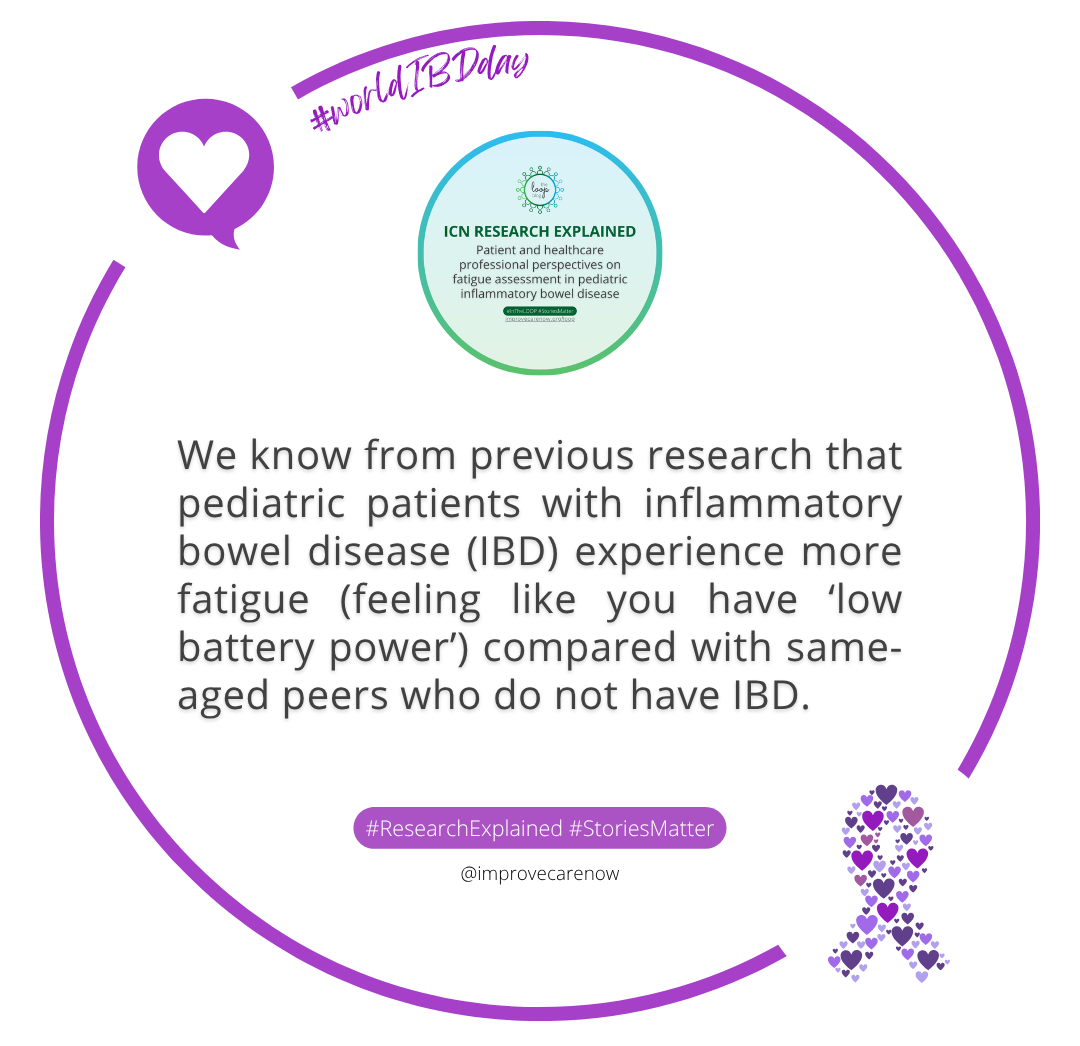
Fatigue is an important clinical concern in pediatric IBD that can impact patients in remission and during flares. Based on the study findings, both patients and healthcare professionals see fatigue as a common and challenging part of pediatric IBD. Interestingly, there was a mismatch between how patients and healthcare professionals remembered fatigue being discussed: 67% of patients said their IBD healthcare professionals never or not often asked about fatigue while 61% of IBD healthcare professionals reported asking about fatigue routinely during clinic visits. This may suggest that patients and healthcare professionals are not always communicating about fatigue in the same way. For example, a doctor may ask about fatigue when a patient may not recognize that word and may better understand a question about feeling tired or low on energy. This points to ongoing gaps in how fatigue is discussed in care and the need for a more consistent approach to asking about fatigue across ImproveCareNow centers.
Get #InTheLOOP >>
What does this mean for patients, families, and clinicians?
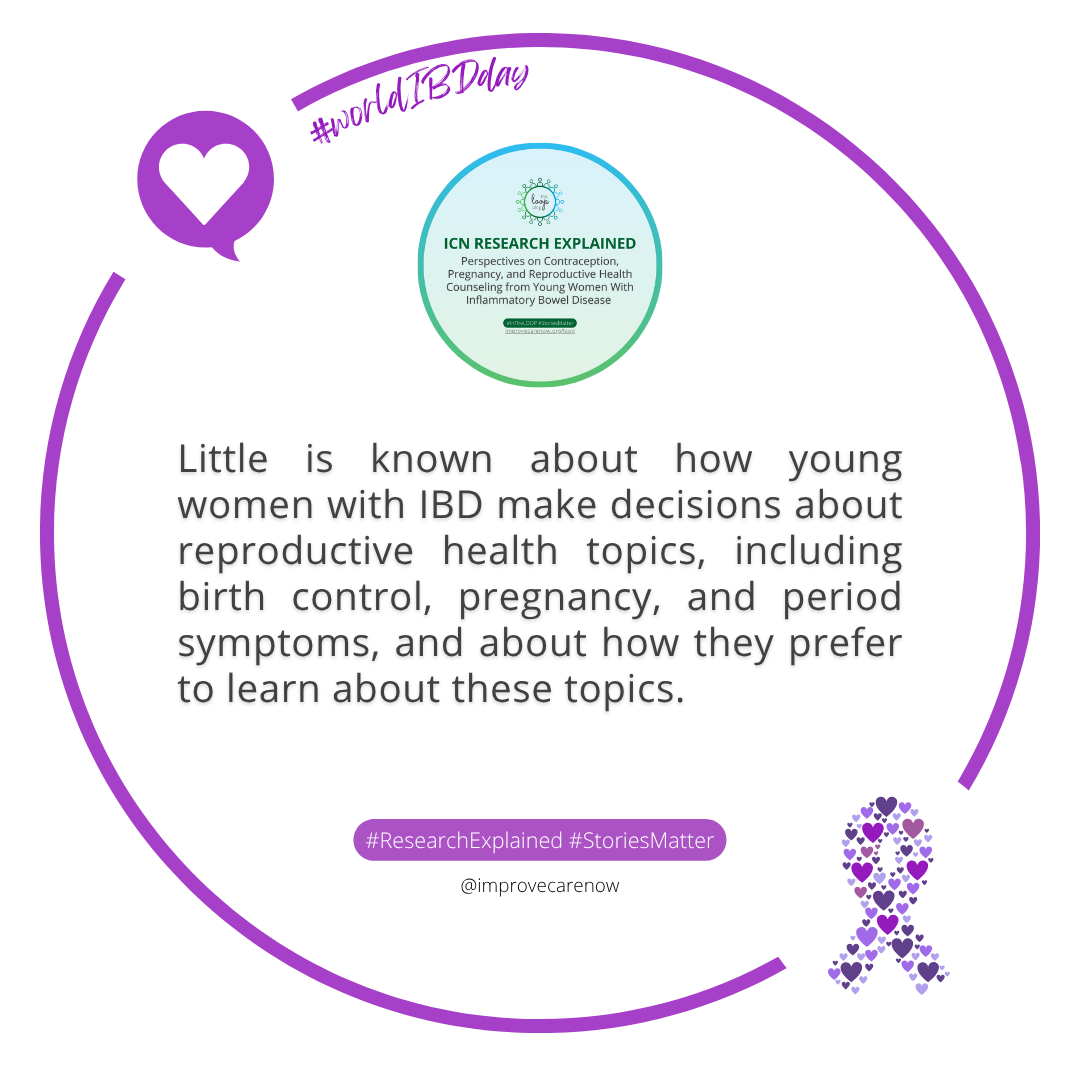
Young women with IBD often have unique concerns when it comes to birth control, pregnancy, and period symptoms. Some said that IBD played a big role in their reproductive health decisions, while others didn’t feel it affected them as much. Many women shared fears about whether they could get pregnant in the future, whether their future children might inherit IBD, and how pregnancy might affect their disease. Several women shared that IBD can make periods more difficult, which led some to use birth control to help manage symptoms. Others worried about side effects—like blood clots—when choosing a contraceptive method.
Importantly, most participants said they want their IBD provider to talk more openly about these topics, offer helpful information, and work closely with reproductive health specialists, such as their primary care doctor or obstetrician/gynecologist, to coordinate care.
Get #InTheLOOP >>
What does this mean for patients, families, and clinicians?
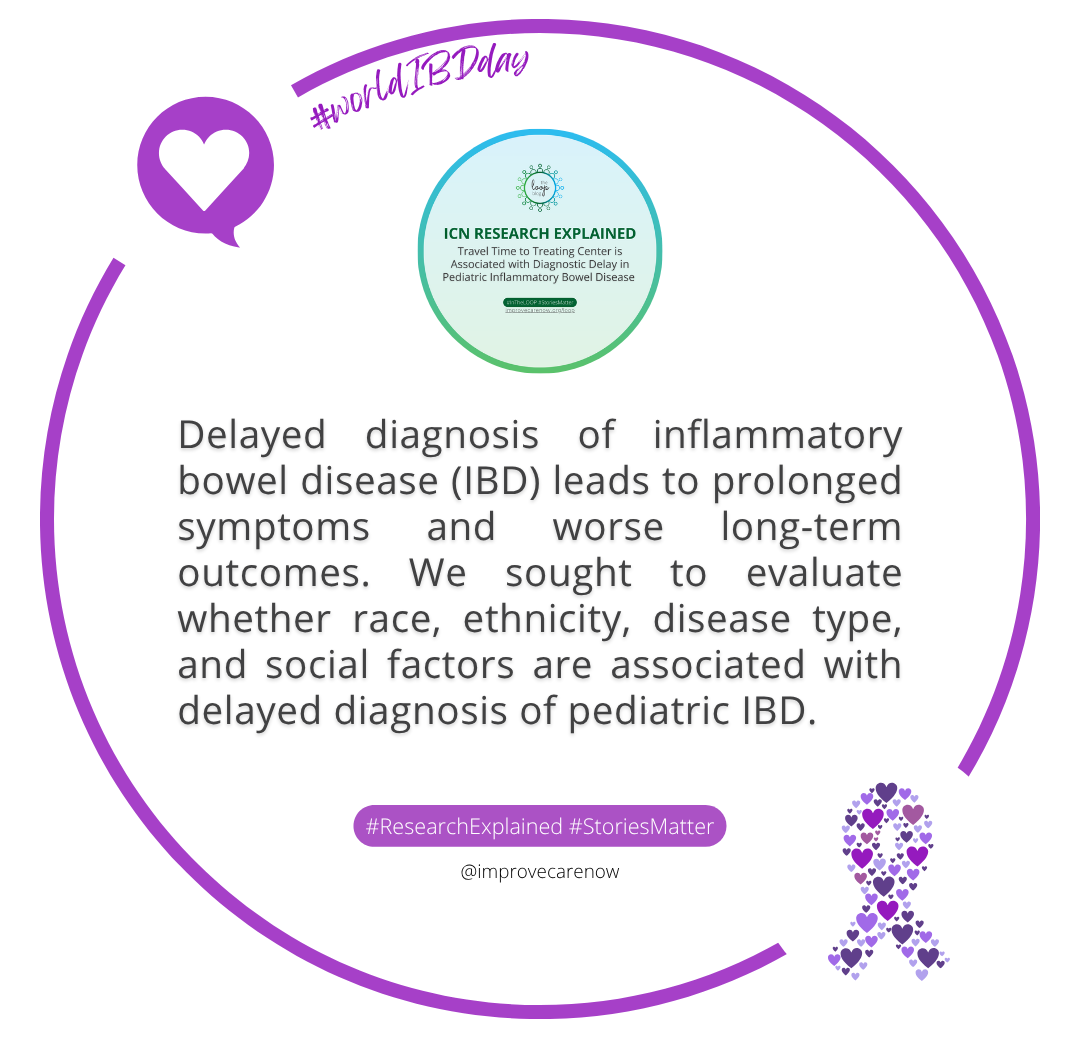
Our study, reassuringly, demonstrated equitable diagnostic care across race, ethnicity, and a number of social risk factors. Interestingly, participants with two or more health conditions were more likely to have a longer time to diagnosis compared to those with no other health conditions. We speculate that this may be due to the attribution of IBD symptoms to other health conditions and/or limited bandwidth of patients with chronic conditions to seek additional medical care for new symptoms. Last, a novel study finding was the demonstration of greater diagnostic delays for children with a longer travel time to reach a pediatric IBD care center. Time to travel could be a possible surrogate for other social determinants of health. Future research should aim to further explore the drivers of this association and develop and test novel models of care delivery to improve access and timeliness of care to affected communities.
Get #InTheLOOP >>
What does this mean for patients, families, and clinicians?
Clinicians who see pediatric patients with IBD can better educate and help increase awareness of these skin conditions, including awareness of the increased risk of increased arthritis and uveitis associated. Knowing that patients with EN and PG are at higher risk for worse intestinal disease, lower remission, higher inflammatory markers, and other conditions like joint pain (arthritis) and eye inflammation (uveitis) can put both clinicians and their patients on notice to be on the look out for these manifestations of their IBD. This is an important study as it is the largest study identifying the incidence of EN and PG and their associations with worse disease, lower remission and other extra-intestinal manifestations.
Get #InTheLOOP >>
What does this mean for patients, families, and clinicians?
Because dosing of adalimumab (only available in 20, 40, and 80 mg) cannot be adjusted as easily for weight as dosing of infliximab, more frequent drug level monitoring should be considered and doses adjusted accordingly, for pediatric patients with IBD who are overweight or obese.
Get #InTheLOOP >>
What does this mean for patients, families, and clinicians?
Before this study, we didn’t know how many youths with IBD had their diagnosis changed.
We found that six out of every 100 youths with IBD received a change in diagnosis. The study also found that youths who were first diagnosed with IBD-u and those with longer follow-up times, were more likely to experience a diagnosis change. Other things like how much of the intestines were affected, nutrition, and extra-intestinal manifestations were not associated with a change in diagnosis.
Get #InTheLOOP >>
What does this mean for patients, families, and clinicians?
Our findings show us that most physicians use war or battle metaphors to describe the immune system in IBD. However, rather than fighting a virus or a bacteria, however, the immune system is fighting the child’s body. We do not have any research on the impacts of using aggressive metaphors to describe autoimmunity to pediatric patients. Exploring how physicians describe disease to pediatric patients with IBD is an important venture to better understand how children internalize their understanding of their disease.
Get #InTheLOOP >>
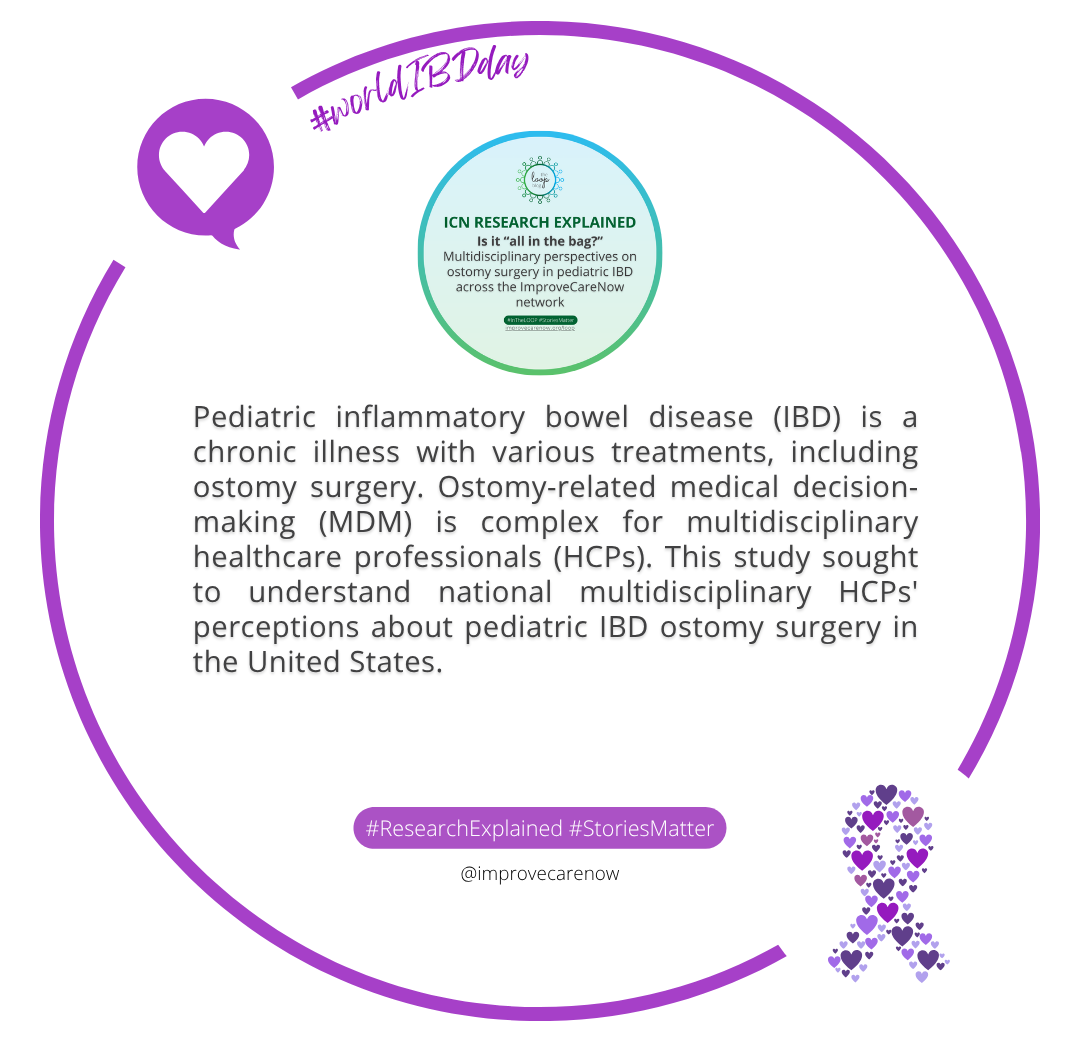
What does this mean for patients, families, and clinicians?
Considering and undergoing ostomy surgery in pediatric IBD can be complicated for patients, family members, and healthcare professionals. Currently, there is variability of standardized, high quality multidisciplinary care for pediatric IBD patients considering surgery within the ImproveCareNow network.
This study has several key takeaways, including:
💚 Healthcare professionals’ perception of family stigma as well as healthcare professionals reporting their own stigma about ostomy surgery; this may increase stigma/negative perceptions about ostomy surgery and make it more challenging to have open, calm, and neutral discussions about this surgical option.
💙 This study has highlighted the importance of psychosocial care for patients considering and undergoing ostomy surgery, and how psychosocial clinicians (psychologists, social workers) can support patients/families throughout the medical decision-making and surgical processes.
💚 Lastly, this study highlighted the current variability of standardized, high quality multidisciplinary care for pediatric IBD patients considering surgery with the ImproveCareNow network and is a call to action to improve access to this care.
Get #InTheLOOP >>
We believe that in order to truly outsmart IBD, the questions we ask and the answers we find must be generated by and be useful to the people whose lives they will impact – patients and their families. ImproveCareNow (ICN) research is prioritized based on what matters most to patients and parents, and we are committed to sharing our results so everyone can understand and take advantage of what’s been learned. The ICN Research Committee has teamed up with patients and parents/caregivers to create and share accessible summaries of completed research called ICN Research Explained
👀 Get #InTheLOOP with ICN Research Explained posts on the ImproveCareNow blog >>
📌 If you’d like to hear more about ICN Research subscribe for ICN Research Updates and we will email you periodically with research opportunities & results!
Everything we do in ImproveCareNow is magnified by the efforts of thousands of improvers! No action is too small; here are some ways to get started:
💚 Join the Patient Advisory Council (pediatric patients with IBD who are 14+)
💙 Join the Parent/Family Advisory Council (parents/caregivers of young people with IBD)
💚 Participate in our Current Research Opportunities (subject to eligibility)
💙 RSVP to join us at one of our upcoming ICN events
💚 Subscribe to blog updates to stay #InTheLOOP with our IBD stories
💙 Download, use & share our free, co-produced IBD resources
💚 Connect with our welcoming & supportive pediatric IBD community and receive IBD resources, community stories, and ICN updates & opportunities
💙 Donate to ImproveCareNow – we are proud to use every dollar donated to advance our mission!
Our mission is to transform the health, care and costs for all children and adolescents with Crohn’s disease and ulcerative colitis (Inflammatory Bowel Disease or IBD) by building a sustainable collaborative chronic care network.