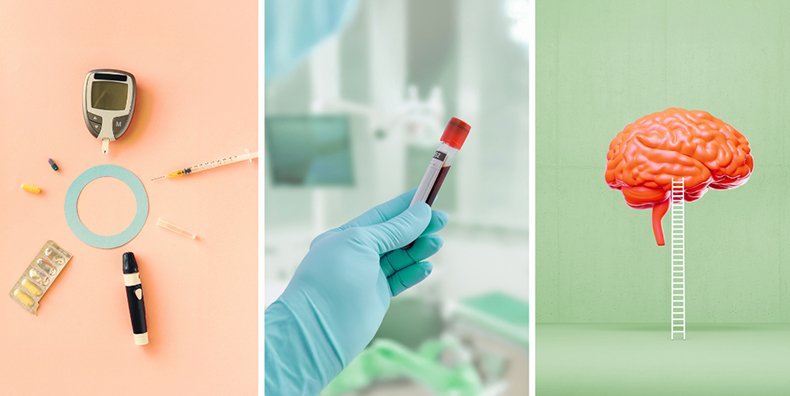

New studies on magnets as an ECT alternative, the surprising mental health benefits of a blood sugar drug, and what thyroid antibodies may signal.
Key Takeaways
- Magnetic seizure therapy (MST) may ease bipolar depression with fewer memory problems than electroconvulsive therapy (ECT), but it’s still experimental and not widely available.
- People with bipolar disorder who take SGLT2 medications for diabetes have, in large studies, lower recorded rates of suicidal behavior, hospitalization, and death.
- A thyroid blood marker called TPO‑Ab may someday help predict bipolar symptom patterns and lithium response, but it isn’t used to guide treatment right now.
All science builds on what came before, and the science of bipolar disorder is no different. Sometimes that means taking the mechanism behind an established treatment, like electroconvulsive therapy, and asking whether a slightly different method could deliver similar benefits with fewer side effects. Other times, it means looking at a medication people with bipolar disorder are already taking for something else and asking whether it’s doing more than expected. And sometimes it means wondering whether a blood test designed for one condition, like an autoimmune thyroid disorder, also carries clues about this brain-based health condition.
These are real examples from three new studies, each with practical takeaways for people living with bipolar disorder. Here’s what researchers found and what it might mean for you.
New Brain Stimulation Therapy May Match ECT, With Less Memory Risk
If medications aren’t effectively managing bipolar depression for you, your provider might suggest electroconvulsive therapy. While ECT can help with symptoms when other options fall short, the possible side effect of memory loss can make it a hard choice.
An international team of researchers enlisted the help of 55 people facing this decision to test whether a different type of brain stimulation that also triggers therapeutic seizures, known as magnetic seizure therapy, could lift depression like ECT does but with fewer cognitive side effects, as other research suggested it might.
In this pilot study, published recently in The American Journal of Psychiatry, half the participants received ECT, while the other half received MST.
Both treatments ended up helping depression symptoms in about half the people who completed a full course of treatment. (The proportion of people who experienced full resolution of depressive symptoms was fairly similar too: about 30 percent in the ECT group and 20 percent in the MST group.)
The main difference between the two treatments was their impact on memory: Roughly 22 percent of those who received ECT had problems on memory tests after the treatment, compared with about 7 percent of the MST group.
This was a small pilot study, so larger trials are needed before MST can be offered more broadly. Still, these results suggest that MST could be a solid alternative to ECT for treatment-resistant bipolar depression.
What This Means for You
- If memory concerns have kept you from considering ECT, MST may be an alternative someday. It’s still investigational for bipolar depression and is not yet approved by the U.S. Food and Drug Administration, but you can ask your provider whether any clinical trials are enrolling near you.
- ECT remains a proven option. Yes, memory loss is a known side effect, but it’s complicated: A scientific review noted that some reported memory problems may stem from the underlying mental health condition, and, for many, the cognitive issues fade over time. If you’re worried, talk to your provider, who is best positioned to forecast how ECT might affect you specifically.
Could a Blood Sugar Drug Help People With Bipolar Disorder? A Big Study Says Maybe
A common class of diabetes medications may do more than manage blood sugar.
In a large study, published recently in the Journal of Affective Disorders, United States–based researchers found that people with bipolar disorder who took SGLT2 inhibitors had lower rates of suicidal behavior, hospitalization, and death.
These medications, which include empagliflozin (Jardiance) and dapagliflozin (Farxiga), help manage blood sugar like GLP-1 receptor agonists such as semaglutide (Ozempic) do, but they work through a different pathway, clearing sugar through the kidneys. SGLT2 inhibitors are used to treat the symptoms of diabetes, heart failure, and kidney disease, according to Cleveland Clinic.
Animal studies have hinted that SGLT2 inhibitors may help calm inflammation and protect brain cells, which could affect mood, and that early science is part of why researchers are exploring them as a possible new bipolar treatment.
The researchers analyzed the health records of more than 1.23 million adults with bipolar disorder, about 36,000 of whom were taking SGLT2 inhibitors. Over a five-year period, that group had roughly a 25 percent lower risk of suicidal behavior, a 29 percent lower risk of hospitalization, and a 45 percent lower risk of dying from any cause.
This large observational study points to a real link between SGLT2 inhibitors and certain health benefits for people with bipolar disorder, but it can’t confirm that the drug caused the difference. People taking these medications may differ in ways that the study couldn’t fully measure, and those differences could explain the health benefits. Only controlled trials can show whether the drugs themselves are responsible.
What This Means for You
- If you are already taking an SGLT2 inhibitor for diabetes or kidney disease, that is reassuring. With bipolar disorder, you often have to weigh how medications for other conditions might affect your mood, usually with an eye focused on potential risks. Here, the evidence points the other way: a possible bonus rather than a trade-off.
- But this isn’t a reason to ask for a new prescription yet. SGLT2 inhibitors aren’t used to treat bipolar disorder, and they carry their own side effects. Their role in mood is still a research question, not a treatment recommendation.
- Yet, it’s a hopeful sign that new treatment options are being explored. Repurposing existing medications is one way that researchers look for better mental health treatments. These findings suggest that SGLT2 inhibitors are a promising candidate for future trials aimed at improving health for people living with bipolar disorder. There’s also growing interest in figuring out whether other methods of controlling blood sugar, such as a therapeutic ketogenic diet, may help manage bipolar symptoms.
How a Thyroid Blood Marker May Predict Bipolar Symptoms and Lithium Response
Bipolar disorder doesn’t look the same in everyone, and researchers want to know why. One clue may be sitting in your immune system, according to the results of a new study published in the International Journal of Bipolar Disorders.
A United States–based research team looked at thyroid peroxidase antibodies (TPO-Ab). These are signs that the immune system is reacting against the thyroid gland. Doctors check for this marker in autoimmune thyroid conditions such as Hashimoto’s disease, per Mayo Clinic.
The team reviewed the records of 339 adults with bipolar disorder. About 24 percent carried these antibodies, which is more than the roughly 10 to 15 percent seen in the overall population. People with TPO-Ab shared two traits: They were less likely to have a history of psychosis (hallucinations or delusions), and they did not respond as well to lithium. The researchers noted that this could mean that having TPO-Ab may point to a specific type of bipolar disorder — one that comes with less psychosis but is harder to treat with lithium.
This type of study works like a snapshot in time. It can point to a link, but it cannot show that the antibodies are the cause. More research is needed to understand the connection between thyroid antibodies and bipolar disorder.
What This Means for You
- If you’ve tested positive for TPO-Ab, this study suggests that lithium may be less likely to work well for you. These results are preliminary and still need to be confirmed in larger, longer-term studies, but they may be worth raising with your provider when weighing your mood stabilizer options if you have a diagnosed autoimmune thyroid condition.
- This is early research, not a new test to request. Because this was an observational study, the presence or absence of TPO-Ab won’t be used to guide your bipolar treatment today. But it’s a promising lead that could someday help match you to the right medication faster.
Editorial Sources and Fact-Checking
bpHope follows strict sourcing guidelines to ensure the accuracy of its content, as outlined in our editorial policy. We use only trustworthy sources, including peer-reviewed studies, board-certified medical experts, people with lived experiences, and information from top institutions.
Sources +
- Snijders G et al. No Association Between Anti-Thyroidperoxidase Antibodies and Bipolar Disorder: A Study in the Dutch Bipolar Cohort and a Meta-Analysis. Psychoneuroendocrinology. November 16, 2019.
- What Is Electroconvulsive Therapy (ECT)? American Psychiatric Association. January 2023.
- Bumberger DM et al. Clinical and Cognitive Outcomes Comparing Right Unilateral Ultrabrief Electroconvulsive Therapy Versus Magnetic Seizure Therapy for Bipolar Depression: The CORRECT-BD Trial. The American Journal of Psychiatry. May 5, 2026.
- Kritzer MD et al. Electroconvulsive Therapy: Mechanisms of Action, Clinical Considerations, and Future Directions. Harvard Review of Psychiatry. May 2023.
- Singh B et al. Association of SGLT2 Inhibitors With Suicidality, All-Cause Mortality, and Hospitalization in Bipolar Disorder: A Cohort Study of 1.23 Million Adults. Journal of Affective Disorders. August 1, 2026.
- SGLT2 Inhibitors. Cleveland Clinic. July 31, 2025.
- Pathak BD et al. Thyroid Peroxidase Antibodies in Bipolar Disorder: Implications for Clinical Sub-Phenotypes and Lithium Response. International Journal of Bipolar Disorders. April 3, 2026.
- Thyroid Peroxidase Antibody Test: What Is It? Mayo Clinic. July 9, 2024.

