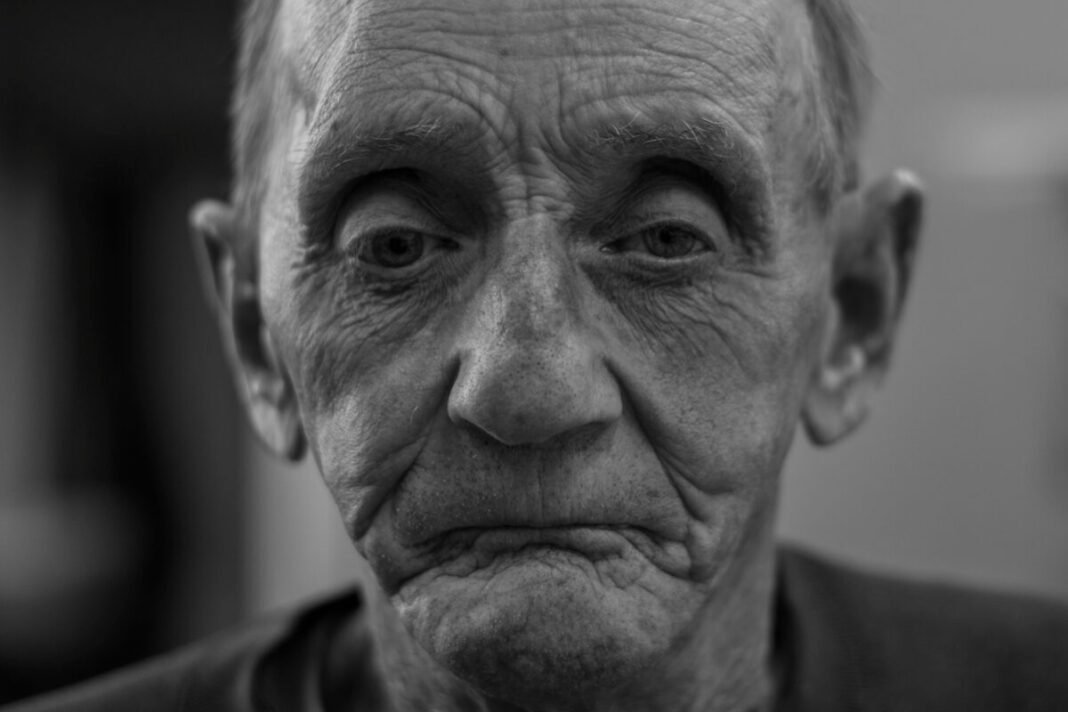

Violence may end in a moment, but its effects can last a lifetime.
Violence is a major public health issue that affects millions of people worldwide. Its immediate consequences are well established: people who experience violence are at increased risk of depression, anxiety, post-traumatic stress disorder (PTSD), self-harm and suicidal behaviour (McManus et al., 2022; Oram et al., 2022).
Previous research has shown that childhood violence can have lasting effects into early adulthood (Olofsson et al., 2012), but it remains unclear whether these health inequalities diminish over time or continue into older age. If the effects of violence persist for decades, violence prevention may be as important for healthy ageing as many of the lifestyle interventions that typically dominate public health policy (Abud et al., 2022).
Fadeeva and colleagues (2025) explored this important question using data from 6,171 adults aged over 50 from England and followed them for 13 years.
Methods
This research used data from the English Longitudinal Study of Ageing. The researchers analysed responses from 6,171 participants who were aged 50 years and above in England from 2007 to 2019. In 2007 the participants answered a self-report questionnaire on childhood abuse and lifetime experiences of violence. The childhood abuse questionnaire gathered information on physical abuse by their parents before the age of 16. The lifetime experiences of violence questionnaire gathered information about both physical and sexual violence up until 2007.
Participants were followed up every two years between 2007 and 2019 using computer-assisted interviews and self-completion questionnaires. These repeated questionnaires collected information on participants’ health, wellbeing, demographics, and social circumstances. The health outcomes measured every two years included depressive symptoms (using the Centre for Epidemiologic Studies Depression Scale) and limiting long-standing illness or disability (LLSID).
To analyse the data, the researchers used logistic multilevel regression and growth curve modelling to investigate how experiences of violence were associated with changes in physical and mental health over time. The models were adjusted for a wide range of demographic, socioeconomic and social factors, including age, education, marital status and financial hardship, and the results were analysed separately for men and women.
Results
The study followed 6,171 adults aged 50 years and older in England between 2007 and 2019.
- 12.7% reported at least one form of violence or abuse
- 3.5% reported childhood physical abuse
- 6% reported lifetime physical violence
- 6% reported lifetime sexual violence
- 32.8% had a limiting long-term illness or disability at baseline
- 27.8% met the threshold for probable depression at baseline
Across all analyses, exposure to violence was associated with poorer health in later life. Even after adjusting for demographic and socioeconomic factors, including age, education, marital status, housing and financial hardship, people who had experienced violence were more likely to report both depressive symptoms and long-term illness or disability than those who had not.
Mental health outcomes
Violence exposure was consistently associated with poorer mental health. Childhood physical abuse showed a similar pattern, and associations were weaker for sexual violence once the model adjusted for demographic, socioeconomic and social factors. The table below shows results for any violence exposure specifically; the childhood physical abuse and sexual violence models followed the same broad pattern, but aren’t tabulated here.
| Outcome | Exposure | Men aOR (95% CI) | Women aOR (95% CI) |
|---|---|---|---|
| Probable depression | Any violence | 1.99 (1.34 to 2.94) | 1.38 (1.02 to 1.86) |
Men who had experienced any violence had almost twice the odds of probable depression compared with men who had not. The association was present for women too, but smaller. This suggests violence is harmful for both men and women, but its relative impact on mental health may be more pronounced for men in this cohort.
Physical health outcomes
Violence exposure was also associated with poorer physical health throughout the study period. Physical violence showed particularly strong associations with later-life physical health, and childhood physical abuse was linked to poorer physical outcomes too. Sexual violence was not significantly associated with most physical health outcomes after adjustment.
| Outcome | Exposure | Men aOR (95% CI) | Women aOR (95% CI) |
|---|---|---|---|
| Long-term illness/disability | Any violence | 1.74 (1.08 to 2.81) | 2.15 (1.45 to 3.17) |
| Long-term illness/disability | Physical violence | 2.15 (1.21 to 3.81) | 4.53 (2.50 to 8.24) |
Men reporting any violence had 74% higher odds of long-term illness or disability, while women had more than double the odds. The gap widened further for physical violence specifically: men had more than twice the odds, and women more than four times the odds, of long-term illness or disability compared with those who had not experienced it.
Health trajectories over time
The longitudinal analyses found little evidence that the health consequences of violence lessened with age. For both mental and physical health outcomes, inequalities were already evident at baseline and persisted across the 13-year follow-up period. Rather than emerging or widening over time, these differences remained relatively stable, suggesting the adverse effects of violence can endure well into later life.
The weaker findings for sexual violence should be interpreted cautiously. The authors note that the broad measure used in the study combines experiences ranging from harassment to rape, which may have obscured important differences in the long-term health impacts of different forms of sexual violence.

Conclusions
- The authors concluded that experiences of violence in both childhood and adulthood are associated with long-term disadvantages in physical and mental health and continue into older age.
- Using the 13-year follow up data, the study found little evidence that the health gap between people who had experienced violence and those who had not narrowed over time.
- Physical violence was strongly associated with poorer health outcomes, including depression and limiting long-standing illness or disability (LLSID).
- The authors highlighted that preventing violence across the life course could help promote healthier ageing and reduce future health burdens on individuals and society.
Strengths and limitations
A key strength of this study is the use of data from the English Longitudinal Study of Ageing (ELSA), a large, nationally representative cohort of adults aged 50 years and older in England. This improves the generalisability of the findings to the older population living in the community.
The longitudinal design is another major strength. This allowed the researchers to examine not only whether health differences existed but also how they evolved over time, providing a stronger basis for assessing long-term trajectories rather than single time-point associations.
Despite the strengths, several key limitations affect how the findings should be interpreted, particularly in relation to measurement, bias and causal inference. Violence exposure was measured at a single time point in 2007, requiring participants to recall experiences that may have occurred decades earlier. This introduces the possibility of recall bias, particularly for childhood events and sensitive experiences such as sexual violence, which are often underreported. As a result, exposure misclassification is likely, meaning some individuals with a history of violence may have been incorrectly classified as unexposed.
Related to this, the measurement of violence was limited. Childhood violence was restricted to physical violence by parents and did not include violence by other perpetrators. Similarly, sexual violence was grouped broadly, combining experiences that vary substantially in severity and context. These measurement limitations likely reduced the precision of exposure classification and may have diluted true associations.
A further key limitation is the inability to capture changes in exposure over time. Violence was treated as a fixed lifetime exposure measured at baseline, meaning any experiences of violence occurring after 2007 were not included. This makes it difficult to distinguish the effects of historical violence from ongoing or repeated victimisation and may underestimate the cumulative impact of violence across the life course.
Finally, although the study adjusted for a wide range of confounders, it is possible that other unmeasured factors also contributed to the associations observed. Key factors such as substance use, access to mental health services, and levels of social support were not fully captured. These unmeasured variables may partly explain the observed associations between violence and later-life health outcomes.
Implications
This study identifies that health impacts of violence do not fade with time. Instead, experiences of childhood physical violence and violence in adulthood can have an effect on both mental and physical health into older age.
For healthcare professionals, this reinforces the need for trauma-informed approaches across all services that work with older adults. Depression, chronic illness, disability, and functional decline in later life may, in part, reflect trauma experienced decades earlier. Healthcare professionals should be aware that a history of violence may be an important factor when understanding a person’s current physical health difficulties, emotional wellbeing and healthcare needs.
At a policy level, these findings reinforce that preventing violence is not only an immediate safeguarding priority but also a long-term chronic disease and mental health strategy, particularly given how much of the existing global disease burden already falls on older people (Prince et al., 2015). The healthy ageing agenda often focuses on exercise, diet, sleep, and social connection. Policymakers should recognise violence prevention as a long-term public health intervention with the potential to reduce further demand on health and social care systems.
This study also highlights several priorities for future research. Understanding why some individuals experience more persistent health outcomes than others could help identify protective factors and targets for future interventions. Future research could focus on resilience factors such as social support, access to therapy, community connectedness, or socioeconomic resources. Understanding not only what causes long-term disadvantage but also what promotes resilience and recovery could have important implications for both practice and policy.
More broadly, these findings challenge the idea that healthy ageing is shaped primarily by current lifestyle factors. Instead, they highlight the importance of understanding health as the cumulative product of life experiences, including exposure to violence.

Conflicts of interests
Jess Stace has no conflicts to declare. AI tools were used for proof reading and in the editing process.
Edited by
Laura Hemming.
Links
Primary paper
Anastasia Fadeeva, Polina Obolenskaya, Estela Capelas Barbosa, Gene Feder, Sally McManus (2025). Violence across the life course and physical and mental health trajectories in later life: a 13-year population-based cohort study in England. The Lancet Healthy Longevity, 6(7).
References
Abud, T., Kounidas, G., Martin, K. R., Werth, M., Cooper, K., & Myint, P. K. (2022). Determinants of healthy ageing: a systematic review of contemporary literature. Aging clinical and experimental research, 34(6), 1215-1223.
McManus, S., Walby, S., Barbosa, E. C., Appleby, L., Brugha, T., Bebbington, P. E., … & Knipe, D. (2022). Intimate partner violence, suicidality, and self-harm: a probability sample survey of the general population in England. The Lancet Psychiatry, 9(7), 574-583.
Prince, M. J., Wu, F., Guo, Y., Gutierrez Robledo, L. M., O’Donnell, M., Sullivan, R., & Yusuf, S. (2015). The burden of disease in older people and implications for health policy and practice. The Lancet, 385(9967), 549–562. https://doi.org/10.1016/S0140-6736(14)61347-7
Olofsson, N., Lindqvist, K., Shaw, B. A., & Danielsson, I. (2012). Long-term health consequences of violence exposure in adolescence: A 26–year prospective study. BMC public health, 12(1), 411.
Oram, S., Fisher, H. L., Minnis, H., Seedat, S., Walby, S., Hegarty, K., … & Howard, L. M. (2022). The Lancet Psychiatry Commission on intimate partner violence and mental health: advancing mental health services, research, and policy. The Lancet Psychiatry, 9(6), 487-524.